
Before We Cross

Before we begin this reflection, I want to start with the illustration.
This image is an ode to one of my oldest friends, someone with whom I have shared several crucial moments in life.
Over the years, we have found ourselves beside each other through decisions, changes, endings, beginnings and moments when neither of us could fully know what would come next.
So when I imagined The Crossing, I wanted a piece of that friendship to live here too.
Because although the decisions we make are ultimately our own, we do not always arrive at life's crossings alone.
Sometimes someone sits beside us for a while.
They listen. They witness. They remind us who we are. They may offer their perspective without choosing for us. And sometimes, their presence simply makes it a little easier to sit at the edge long enough to hear ourselves think.
This is a fitting place to begin our reflection on conscious choice.
Because before we cross, there is often a moment at the water's edge.
A moment to pause. To look at where we have been. To look at what lies ahead.
And to ask ourselves:
What am I actually choosing?
Before a decision becomes a decision
There are moments in life when we find ourselves standing at the edge of something.
A relationship. A new opportunity. A conversation we know we need to have.
A move. A boundary. An ending. A beginning.
Sometimes we have been walking toward that moment for a long time. At other times, life seems to bring us there unexpectedly. And suddenly, there is a choice in front of us.
We often think of decisions as the moment we finally say yes or no. The moment we stay or leave. Accept or decline. Begin or end.
But there is also everything that happens before that moment.
The wondering. The weighing. The conversations. The quiet knowing we may not yet have words for.
The part of us that is ready. And perhaps another part that is still afraid.
Before we cross, there is room for all of it.
We do not have to rush ourselves toward an answer simply because we have arrived at the water.
Sometimes we need to sit there for a while.
What is sitting beside us?
We rarely arrive at an important decision empty-handed. We bring our experiences with us.
Our hopes. Our fears. Our responsibilities. Our values. Our expectations. The people we love.
The things we have learned. And sometimes the things we are still learning to let go of.
All of these can find their way into the choices we make.
Sometimes we also bring old ways of protecting ourselves with us. Ways of responding that may once have helped us feel safe, avoid rejection, keep the peace or make our way through difficult circumstances.
A conscious decision does not require us to somehow remove all of these influences before we choose.
That may not even be possible. It asks us to notice them.
To become curious about what is sitting beside us at the water's edge.
What part of me wants to cross?
What part of me wants to stay?
What am I afraid might happen if I choose this?
What am I afraid might happen if I don't?
Whose disappointment am I trying to prevent?
What am I hoping this decision will give me?
What might it ask from me in return?
And underneath all of that:
When the noise settles, what feels true for me?
Sometimes we say yes because something genuinely feels right for us.
Sometimes we say yes because saying no feels difficult.
Sometimes we stay because there is still something meaningful to stay for.
Sometimes we stay because leaving feels frightening.
Sometimes walking away is an act of courage.
And sometimes staying long enough to have the conversation is.
The choice itself does not always tell us what is underneath it.
That is why it can be helpful to become curious before we move.
There may not be one perfect answer waiting for us.
But slowly, we may begin to hear ourselves more clearly.
Sometimes both shores matter
Every yes contains a no. Not every decision comes with an obvious right and wrong choice.
Choosing one direction often means not choosing another.
That does not automatically make the other direction wrong.
Sometimes there is something meaningful on both sides.
We may feel excited about what lies ahead and still feel sad about what we would leave behind.
We may know that something needs to end and still cherish what it once gave us.
We may choose a new direction and still wonder about the road we did not take.
There can be grief inside a good decision. There can be uncertainty inside a thoughtful one.
There can even be love for something we know we can no longer choose.
We can choose ourselves and still feel the weight of someone else's disappointment.
We can make the right decision for this season of our lives and still wonder occasionally what would have happened if we had chosen differently.
Perhaps conscious choice is not about making all of those feelings disappear.
Perhaps it is about allowing them to sit beside us while we decide.
To acknowledge what each direction carries.
What we may gain. What we may lose. What we are ready for. What we are no longer willing to carry.
And what, at this point in our journey, matters enough to move toward.
We are allowed to take our time
There can be so much pressure around decisions.
Have you decided yet?
What are you going to do?
What are you waiting for?
Sometimes a decision genuinely needs to be made quickly.
But not every pause means we are stuck. Sometimes the pause is where clarity begins.
We may need more information. Another conversation. A little distance.
We may need time to notice our body's response. To separate fear from intuition. To distinguish what we want from what others want for us. To understand what a choice may require practically, emotionally or relationally.
Perhaps we need a quiet evening. A prayer. A page in a journal. A walk.
Or simply enough time for the first wave of emotion to settle.
We may need to hear the opinions of people we trust and then spend some time noticing what remains when their voices become quiet again.
We do not always need to turn uncertainty into immediate action.
Taking our time does not guarantee that we will eventually feel completely certain.
It simply gives us the opportunity to meet our decision with greater awareness.
We do not have to sit at the water alone
Some of the most important decisions in our lives may be ours to make, but that does not mean we have to carry them alone. Sometimes we need someone beside us.
Someone who listens without immediately telling us what to do.
Someone who knows enough of our story to understand why this moment matters.
Someone who asks a question we had not considered.
Someone who gently reminds us of something we once said mattered to us.
Someone who can sit with our uncertainty without rushing us out of it.
They cannot make the crossing for us. And they cannot promise us what we will find on the other side.
But they can sit beside us while we look across the water.
There is something deeply valuable about being accompanied without being directed.
To be supported while still being trusted with our own life.
Eventually, the choice remains ours. But for a little while, someone may simply sit beside us.
We cannot see everything from the shore
Even after we have taken the time to reflect, there will still be things we cannot know.
We cannot see every part of the journey from where we are sitting.
We cannot know exactly how another person will respond. We cannot predict every consequence.
We cannot guarantee that what looks right from this side of the water will unfold exactly as we imagined.
That uncertainty can make choosing difficult.
We may find ourselves waiting for a level of certainty that life cannot always give us.
But making a conscious decision does not mean knowing everything.
It means allowing ourselves to look carefully at what we do know.
What matters to us. What we need. What we value.
What we have learned. What feels possible. What no longer feels right.
And what we are willing to choose with the understanding we have today.
Sometimes certainty never arrives. Instead, we may become clear enough about our values, needs, boundaries and circumstances to say:
Given what I know now, this is the direction I am willing to choose.
Sometimes that is the clarity available to us.
And sometimes, that is enough.
And then, we cross
There may eventually come a moment when we have sat at the water long enough.
Not because every question has been answered. Not because every fear has disappeared.
Not because someone has guaranteed that everything will work out.
But because something within us has become clear enough to move.
We look behind us. We look across the water. We listen once more. And then we choose.
Perhaps the words are simply:
This matters to me. This is what I know. This is what I am ready to leave behind. This is what I want to move toward.
And with what I know today, this is the direction I choose. Then we step into the boat.
Not because someone pushed us from the shore. Not because everyone else was already crossing.
Not because we had to prove that we were brave enough to go.
But because the choice has become ours.
And we are ready to carry it.
Before you cross
If you are sitting at a crossing of your own right now, there may be no need to get into the boat just yet.
Stay at the water's edge for a moment. Look at what is behind you. Look gently toward what may be ahead.
And notice what comes up when you ask yourself:
What am I actually choosing?
What matters to me here?
What am I hoping this choice will make possible?
What might I have to leave behind?
Which voices am I carrying into this decision?
And when the noise settles, what feels true for me?
You do not have to cross simply because you have reached the water.
There is room to sit. To wonder. To talk. To listen. To change your mind.
And when it is time to move, you may still not know exactly what is waiting on the other side.
You may simply know that you have taken the time to meet this choice with care.
And then, when you are ready,
you cross.
We don’t exist to be consumed
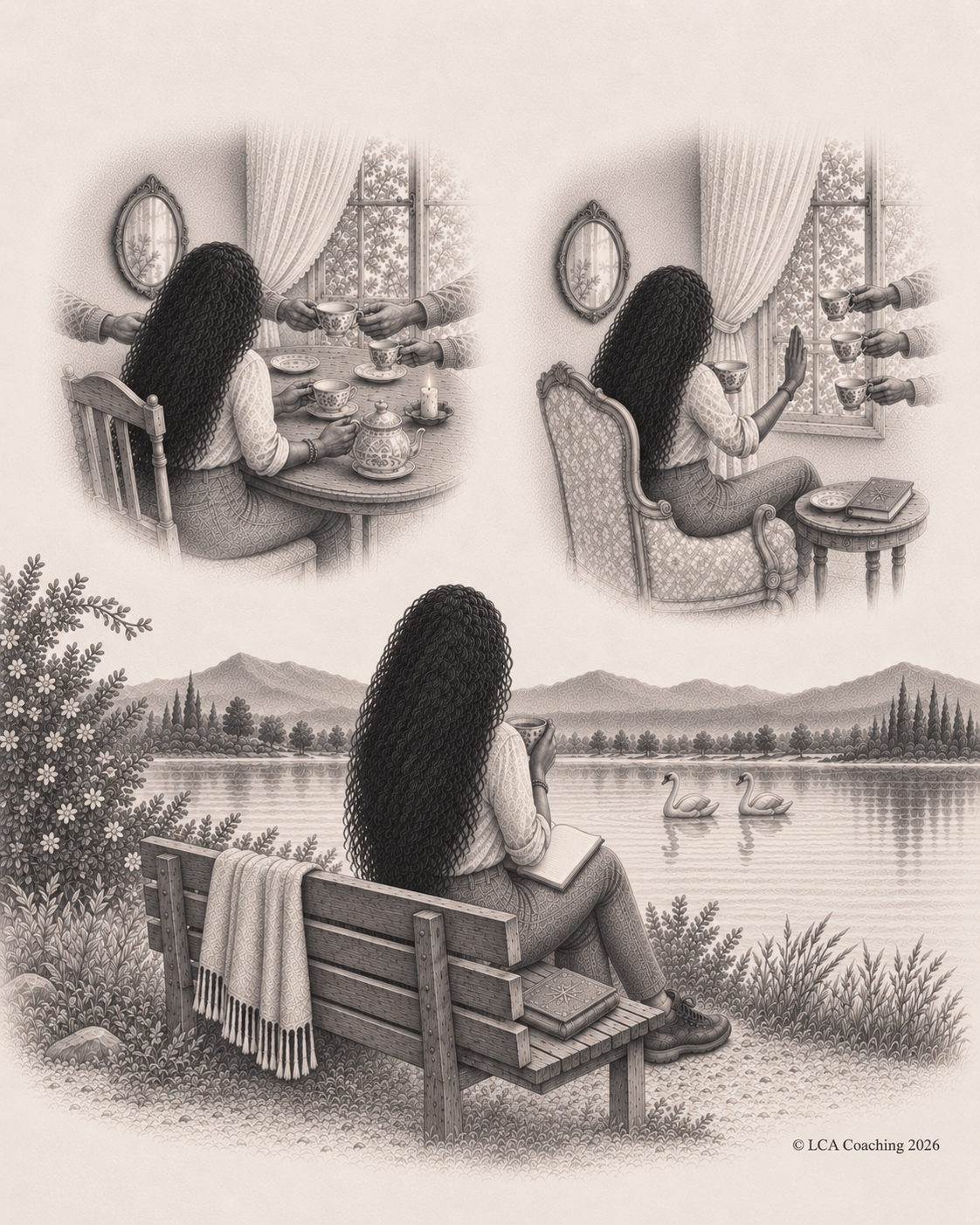
We Don’t Exist to Be Consumed
LCA Contemplation
There are many beautiful things we can offer one another.
Our warmth. Our attention. Our care. Our time.
Our knowledge. Our emotional presence. Our hospitality.
Our willingness to listen, nurture, help and carry.
These things are part of what makes relationships feel safe, meaningful and deeply human.
But something changes when what is freely given begins to be treated as something that is owed.
When kindness becomes availability.
When care becomes responsibility.
When generosity becomes expectation.
When being capable becomes you can handle one more thing.
When being warm becomes you should always make room for me.
And we do not always realize that this shift has happened until we say:
No.
When care becomes an expectation
There is a difference between receiving someone’s warmth and feeling entitled to it.
We may not notice when we cross that line.
Someone has always answered our calls, so their silence suddenly feels personal.
They have often made room for our emotions, so their boundary feels like rejection.
They have shared openly with us before, so we assume we are entitled to know what is happening in their life now.
They have helped us many times, and somewhere along the way, we stop asking whether they actually have the capacity to help again.
Familiarity can quietly create expectation.
What was once appreciated becomes familiar.
What becomes familiar can start to feel expected.
And expectation can quietly turn into entitlement.
But previous access does not guarantee continued access.
Someone having given before does not mean they are required to keep giving.
Warmth is still voluntary.
Care is still something another human being chooses to offer.
We deserve to be met, not only needed
There is something deeply human about wanting to be useful to the people we love.
To support them. To comfort them. To be someone they can turn to.
But there is a difference between being valued as a person and being valued primarily for what we provide.
We often discover that difference when we stop providing something.
When we say no. When we become tired. When we need support ourselves.
When we are no longer the person holding everything together.
It can be painful to discover that a relationship had more room for our usefulness than for our humanity.
Because we are not only listeners. Not only helpers. Not only encouragers.
Not only problem-solvers. Not only caregivers. Not only the strong ones.
We are people who also want to be known.
To be asked how we are doing.
To be cared for without first having to collapse.
To have needs that do not make us inconvenient.
To exist in relationships where our value does not rise and fall according to how useful we are.
We deserve relationships in which someone asks:
How are you?
What do you need?
Do you have space for this?
Can I be here for you?
We deserve to be met, not only needed.
Privacy is not a statement of superiority
Consumption is not only about what we do for other people.
It can also be about how much access people believe they should have to us.
A person who has previously been open may become more private.
And people notice.
Why won’t you tell me?
Why are you keeping things to yourself?
You used to share these things with me.
Privacy is easily mistaken for distance, secrecy, rejection or even arrogance.
But privacy does not mean:
I think I am better than you.
Sometimes it simply means:
This belongs to me.
Not everything we experience needs to become communal property.
We are allowed to have thoughts that are still forming. Dreams we are protecting. Relationships we do not want examined. Decisions we want to make quietly.
Parts of our lives that are precious precisely because they are not available for everyone to enter.
We can be warm and private. Open and discerning. Loving without being accessible in every way.
Closeness does not require complete access. And loving someone does not mean owning every room inside them.
When confidence changes a familiar dynamic
Something also shifts when a person becomes more confident.
More discerning. More comfortable saying no. More intentional about where their time and energy go.
They stop explaining every decision. They no longer immediately make themselves available.
They protect things they once freely shared. They stop accepting what they once tolerated.
From the inside, this feels like growth.
From the outside, it can feel like the person has changed the rules.
Especially when the old version of them was easier to access.
People may need time to adjust to our growth. But growth can also reveal expectations that had remained invisible before.
A boundary can expose an entitlement we did not know was there.
Not because boundaries create entitlement.
But because we often only discover what we believed we were owed when somebody stops giving it to us.
Confidence is not an attack. Discernment is not arrogance.
And becoming more intentional about who and what has access to us does not mean we believe we are above anyone else. It means we understand that our presence has value.
When no changes the relationship
Saying no can reveal things that saying yes kept hidden. As long as we are available, accommodating and giving, there may be very little friction.
Then we become tired. We change our minds. We need our time for something else.
We no longer want to have that conversation. We do not want to lend something.
We do not want someone in our personal space. We do not have the capacity to take care of another person’s needs.
Or there is no dramatic reason at all.
We simply do not want to.
And suddenly, the relationship feels different.
Someone is disappointed. They try to convince us. They ask for an explanation.
They remind us of everything they have done for us. They tell us we have changed.
They interpret our boundary as rejection, selfishness or arrogance.
And this is where saying no can become difficult. Because we are not only learning how to say no.
We are learning to tolerate no longer being the version of ourselves that was most convenient for someone else.
The discomfort of disappointing people
Many of us have learned that being a good person means being accommodating.
Helpful. Generous. Understanding. Easy to approach.
We may have learned to anticipate what other people needed before they even asked.
Saying yes may have kept the peace. Being useful may have made us feel valued.
Or we may simply care deeply about people and genuinely enjoy giving.
But when goodness becomes confused with endless availability, a boundary can begin to feel like a moral failure.
Am I being selfish?
Should I just do it?
It isn’t that big of a deal.
What if they think I’ve changed?
What if they are angry with me?
And so we override ourselves.
Again. And again. Until our yes no longer comes from generosity.
It comes from guilt.
Our warmth can include us too
For those of us who naturally give a lot, there is value in examining why we give in the ways that we do.
Is this generosity?
Is this love?
Is this something I genuinely want to offer?
Or have I learned that being warm means remaining endlessly accessible?
The person consuming our energy may not even be consciously demanding it.
We may never have shown them where the edges are.
We continue saying yes while quietly becoming resentful.
We offer more than we have capacity for and hope the other person will somehow notice.
We make ourselves available and then feel hurt that people keep coming.
Boundaries allow our warmth to remain sincere. They allow a yes to actually mean yes.
There is a difference between:
I am here because I want to be.
and
I am here because I don’t feel allowed to leave.
Our care does not become less loving, because it has limits.
Our warmth does not become less genuine, because it includes us too.
Learning to say no
Learning to say no is not only about finding the right words.
The words are often the easiest part.
No.
I can’t.
I don’t have capacity for that.
That doesn’t work for me.
I’d rather not.
I want to keep that private.
The harder work often comes afterwards.
Not immediately explaining. Not rushing to soften the boundary until it disappears.
Not changing our answer, because someone looks disappointed.
Not taking responsibility for every feeling our decision creates.
Not needing the other person to agree that our no is reasonable, before we are allowed to keep it.
Because another person’s disappointment does not automatically mean we have harmed them.
Someone wanting something from us, does not automatically create an obligation to provide it.
And someone having benefited from our yes before, does not give them ownership over our yes today.
No is not a withdrawal of our humanity.
It is an expression of our agency.
We can love people and still have doors
Not everyone needs access to every part of us.
We can be warm and private. Generous and discerning. Loving and unavailable. Compassionate and unwilling.
We can decide who enters our home. Who hears our story. Who receives our time.
Who gets access to our body, our thoughts, our emotional world, our energy and our attention.
And those decisions do not have to be an indictment of somebody else’s worth.
A closed door can simply mean:
This is where I end and you begin.
And we need to honour other people’s doors too
There is another side to this conversation.
How do we respond when somebody tells us no?
When someone does not answer. Does not invite us. Does not share. Does not help. Does not give us the access we hoped for.
Do we become offended?
Do we try to persuade them?
Do we demand an explanation?
Do we interpret privacy as rejection?
Do we withdraw our warmth because we did not receive what we wanted?
It is easy to recognize entitlement when somebody struggles with our boundaries.
It is harder to recognize it when we are the person standing outside somebody else’s door.
Boundaries are not only something we learn to have.
They are something we learn to honour in other people.
If our humanity deserves freedom, dignity and choice, theirs does too.
An invitation to contemplate
The question is not only:
Who takes too much from me?
There is value in looking at our own side of the relationship too.
Where in my life does my yes come freely?
Where does it come from guilt, fear or obligation?
What do I continue to give, because people have become accustomed to receiving it?
Where have I taught people, intentionally or unintentionally, that I am always available?
Do the people I love feel valued for who they are, or mainly for what they provide?
What parts of myself do I want to keep private, protected or simply mine?
What am I afraid will happen if I say no?
Can I allow someone to be disappointed without abandoning myself to make the discomfort disappear?
And there is one more question worth sitting with:
How well do I receive somebody else’s no?
To take with you
We were made for relationship.
For generosity. For care. For warmth. For giving and receiving.
But relationship is not ownership. Love is not unlimited access. Care is not a contract for endless availability.
We can give because we choose to give. We can care without carrying everything. We can remain warm without leaving every door open.
We can protect parts of ourselves without believing we are better than anyone else.
We can say no, without turning our no into an apology for existing as a person with limits, preferences, needs and a will of our own.
And we can receive another person’s no without treating their autonomy as a rejection of us.
Because we are not resources to be endlessly drawn from.
We are not roles created to meet one another’s needs.
We are whole human beings meeting other whole human beings.
Our warmth is a gift, not an obligation. We deserve to be met, not only needed.
Our no does not make our yes less loving. It is part of what makes our yes truly ours.
We are allowed to protect what is precious within us.
We Meet in the Light
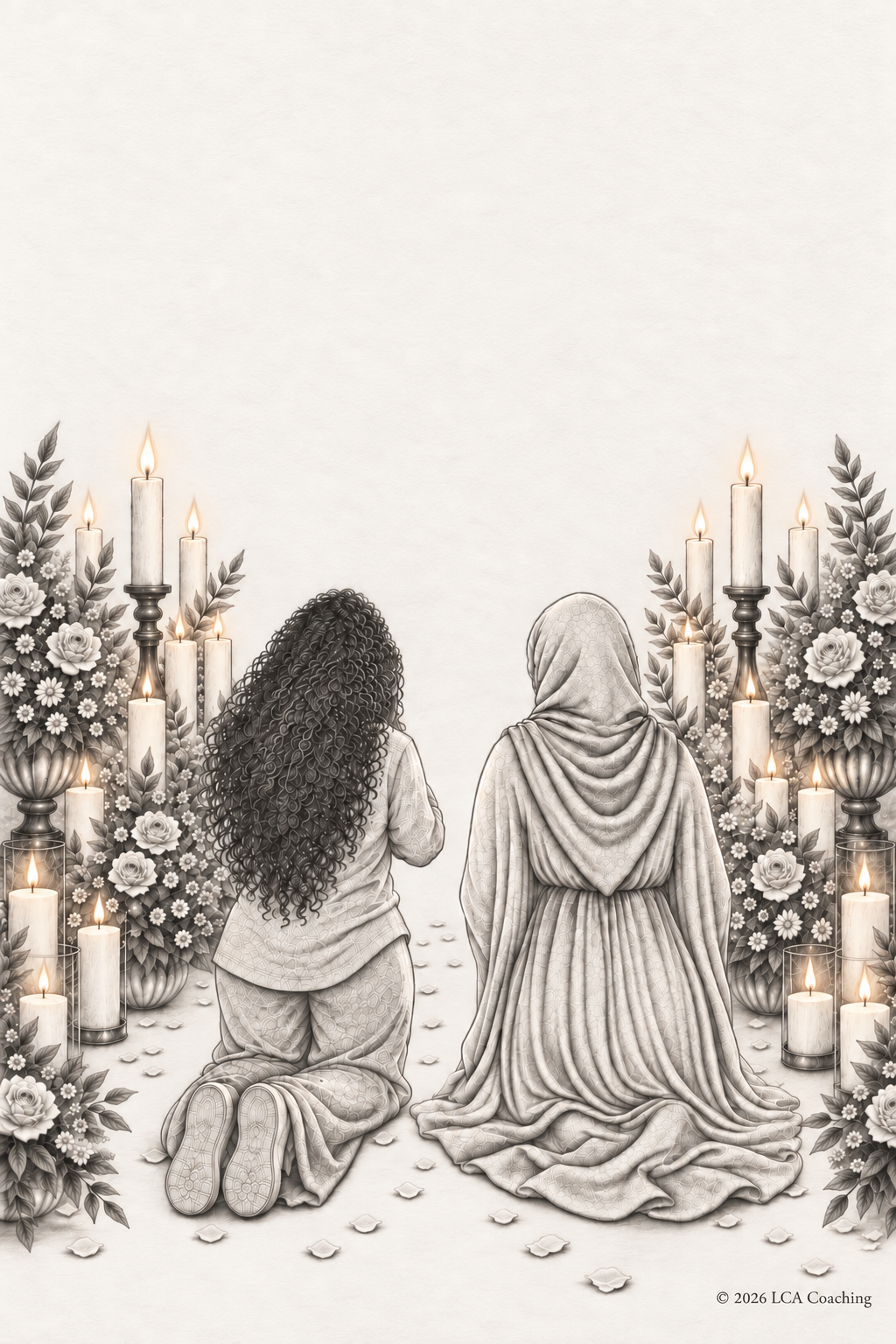
One of my oldest friendships began when she was about sixteen. Since then, life has taken us through so many different seasons. I have had the privilege of watching her grow into the woman she is today, just as she has witnessed so much of my own becoming. There is something deeply precious about having known and loved someone through so many versions of who you have both been.
She is a devoted Muslim. I am a Christian. Our faiths are different. And throughout all these years, I have never needed her faith to look like mine in order to recognize something beautiful in the way she lives it.
She is a bright light. One of the purest people I know. I deeply respect her devotion, her sincerity and the way she tries to embody what she believes in the way she moves through the world.
This contemplation is an ode to her and to the bond we share. But it is also about something I have come to understand through many of the friendships in my life.
I have friends from different cultures, backgrounds and religious traditions. Some are Muslim. Some are Buddhist. Some are Hindu. Some experience faith or spirituality very differently from me.
Loving people who are different from us can be beautiful. But it is not always simple.
Sometimes, our differences ask us to learn how to live alongside one another in ways we may not have had to think about before.
When our differences become real
It can be relatively easy to appreciate our differences when they do not ask anything difficult of us.
But sometimes they enter the relationship. They show up in our celebrations, our traditions, our expectations, our boundaries and in what we ask of one another.
Culture can shape what friendship, family, celebration, care and showing up for one another look like.
Religion can shape what we participate in, which spaces we enter, which rituals we take part in and what we feel able to do while remaining faithful to what we believe.
And sometimes, two people who genuinely love each other can find themselves standing on different sides of something that matters deeply to both of them.
Imagine someone we love is getting married in a place of worship belonging to a different religion.
For one of us, being there may feel like the most natural expression of love:
Of course I will be there. You are my friend.
For another, entering or participating in worship connected to another deity may go against a deeply held religious conviction.
One of us may be thinking:
If I matter to you, why wouldn’t you be there?
While the other may be thinking:
I love you deeply. But I cannot meet you there without crossing something sacred to me.
That can hurt. And the hurt is allowed to be there.
But someone’s no is not always a measure of how much they love or value us.
Sometimes, we are encountering an existential conflict. The relationship matters. And what we believe matters.
Both can be true at the same time.
Holding two realities
Sometimes the difference between us is not only in our beliefs or cultures, but in our capacity.
In some cultures, a wedding is celebrated for several days. Being present throughout those days can mean much more than simply attending a celebration. It can represent love, family, belonging and showing someone:
I am here with you.
But someone we love may be neurodivergent, and prolonged social events may leave them deeply overstimulated. Even getting there may ask more of them than we realize. Travelling, navigating unfamiliar environments, changes in routine, being around many people and processing everything that comes with it can already take a great deal of energy.
One of us may be feeling:
This is one of the most important moments of my life. I want you here with me.
While the other may be feeling:
This matters to me too. I love you. And I cannot physically or emotionally sustain everything that being there asks of me.
Neither person has to be wrong.
Two different realities can exist at the same time.
Sometimes someone cannot show up for us in the way we hoped, not because they care less, but because showing up asks something of them that we cannot see from the outside.
Understanding why something matters to someone does not automatically give us the capacity to give it to them.
And having less capacity does not make our love less real.
This can be difficult, especially when showing up is one of the ways we recognize love. We may feel disappointed. We may miss someone. We may wish they could give us more. Those feelings are allowed to exist too.
But we can become curious about the difference between unwillingness and limited capacity.
Instead of only asking:
Why aren’t you showing up for me?
We can also ask:
What does showing up ask of you?
And from there:
What does respecting both people’s autonomy look like here?
Learning to live together without requiring sameness
The people we love are their own people. They carry their own stories, cultures, beliefs, bodies, capacities, values and boundaries. And so do we.
Connection does not make those differences disappear. Sometimes, it brings us close enough to truly encounter them.
We may wish someone could meet us somewhere they cannot.
We may feel disappointed by a boundary even while understanding why it exists.
Something that feels completely comfortable to us may cross a religious boundary for someone else.
Something that means love within our culture may ask more of someone than they are able to give.
Something we experience as inclusion may ask another person to participate in something they do not feel able to participate in. These moments can be tender.
Respecting each other’s autonomy does not mean we stop having feelings about each other’s choices.
It means those feelings do not give us the right to ask someone else to abandon themselves.
Sometimes, we course-correct
We are not always going to know where every boundary is. Sometimes we discover one by bumping into it.
We may ask something without realizing what it means to the other person.
We may make an assumption based on our own culture, faith or way of experiencing the world.
We may not realize how much something asks of someone else. We may misunderstand each other.
We may unintentionally hurt each other. And sometimes, we will have to course-correct.
We can slow down and listen.
We can ask:
What did this mean to you?
And share:
This is what it meant to me.
We can become curious about the space between those two experiences.
Sometimes we realize that we could have approached something differently. Sometimes we need to apologize.
Sometimes a boundary remains exactly where it is, but we understand it better now.
And sometimes, together, we find another way.
We may not be able to attend every day of the celebration, but we can be there for one meaningful part.
We may not be able to participate in a religious ritual, but we can find another way to celebrate someone we deeply love.
The way we first tried to show love may not have been a way the other person could receive it.
So we learn. We adjust. We try again. Not because the relationship has failed. But because knowing someone is an ongoing process.
Loving someone well sometimes means letting go of the idea that love must always look the way we expected it to look.
A boundary does not necessarily mean:
I don’t love you.
Sometimes it means:
I love you. And I cannot meet you there. Can we find somewhere else to meet?
The Inner Cathedral
This is part of what the Inner Cathedral in LCA World represents. The Inner Cathedral is not tied to one faith tradition. It is a symbolic space for exploring what is sacred and meaningful to you, and what gives direction to your life.
A place within ourselves where we become still enough to ask:
What gives direction to my life?
What do I believe?
What do I value?
What do I want to remain faithful to?
For me, inner guidance is deeply anchored in my relationship with God and my Christian faith.
For someone else, what gives their life meaning and direction may be different.
The Inner Cathedral does not ask us to erase those differences.
It gives us space to become quiet enough to listen to what guides us, to explore what is sacred to us and to discern what helps us live with greater dignity, integrity and purity.
There is something important in allowing the people beside us that same space.
We do not have to believe what they believe in order to understand that their convictions may be deeply meaningful to them. We do not have to make ourselves smaller to make room for another person.
And they do not have to make themselves smaller to make room for us.
We can remain rooted in what gives our own lives direction while allowing the people we love to remain rooted in theirs.
This is what harmony can look like
Harmony does not require a life without differences. It does not require a relationship without tension.
Harmony can also live in the way we care for each other when our differences become real.
When we listen after a misunderstanding. When we ask instead of assume.
When we respect a boundary we might not personally need.
When we recognize that someone may not have the same capacity we do.
When we allow a no to remain a no, even when we wish the answer had been different.
When we make room for disappointment without turning it into pressure.
When we realize we got something wrong and course-correct.
When we keep looking for ways of loving one another that allow both people to remain whole.
We will not always get it right.
Sometimes there will be an easy compromise. Sometimes there will not.
Sometimes we will need time. And sometimes we will have to accept that there is a place where someone we love simply cannot meet us.
The question then becomes:
Can we remain in relationship without requiring one another to abandon ourselves?
We do that not by pretending our differences do not matter, but by learning what they mean to each other.
By staying curious. By listening. By allowing difference to exist without requiring sameness.
Where can we meet?
Throughout our lives, we will meet people whose beliefs, cultures, histories, capacities and ways of seeing the world are different from ours. Some of them will become deeply precious to us.
My friend and I will not meet in every belief. We do not need to.
And the same is true of many of the people I love.
There may be places where we cannot meet.
There may be boundaries we need time to understand.
There may be moments when we have to stop, listen, adjust and find another way.
But connection does not require us to meet everywhere.
We can keep looking, with care and respect, for the places where we can.
We don’t have to leave what is sacred to us at the door in order to make room for what is sacred to someone else.
We can remain rooted in what gives our own lives direction while allowing the people beside us to remain rooted in theirs. We can learn each other. We can make room for each other. We can course-correct when we need to.
And when there is somewhere we cannot meet, we can gently ask:
Where can we meet?
Another person does not have to see the world exactly as we do for us to recognize the light in them.
We don’t always have to meet in agreement.
Sometimes, we meet in the light.
How Psychoeducation Can Help Us Understand Ourselves

Sometimes, we feel something before we have the words to explain it. We may know that a conversation affected us without fully understanding why. We may notice that we feel tense around certain people, keep finding ourselves in similar situations, or wonder why something that seems small can feel so big inside us.
When we do not understand what is happening, it is easy to turn towards ourselves with judgement. We may wonder: Why am I like this? Why does this affect me so much? Why can’t I handle this differently?
But perhaps we do not always need to judge ourselves or find an immediate solution. Sometimes, we simply need a little more understanding. This is where psychoeducation can help us.
Finding words for our experiences
Psychoeducation means learning about our thoughts, feelings, behaviour and emotional wellbeing. It can give us language for experiences that we may have felt for a long time but never quite knew how to explain.
We may learn about boundaries and begin to understand why a certain interaction did not feel right. We may learn about stress and the nervous system and recognise why our bodies sometimes become tense or tired when life asks too much of us. We may learn about grief and discover that it does not always look like sadness; it can also show up as anger, tiredness, numbness or longing.
Sometimes, simply finding a word for something can bring a sense of recognition: Oh. Maybe this is part of what I have been experiencing.
We do not need to put a label on everything we feel. We can simply hold new knowledge beside our own experiences and gently ask: Does this help me understand myself a little better?
When understanding softens the way we see ourselves
When we do not understand our responses, we may create painful explanations for them. We might tell ourselves that we are too sensitive, too difficult, not strong enough, or that we should have moved on by now.
But often, there is more to our story.
We may find conflict difficult because conflict has not always felt safe. We may struggle to say no because we have become very used to noticing what other people need. We may suddenly feel exhausted because we have been carrying more than we realised for longer than we realised.
Understanding does not mean that everything we do is helpful or that there is nothing we may want to change. It simply allows us to meet ourselves with curiosity before judgement. Instead of immediately asking What is wrong with me?, we can gently wonder: What might be happening here?
Our patterns often have a story
The ways we move through life do not appear from nowhere. Our experiences, relationships, families, environments and the things we have learned along the way can all shape how we respond today.
Some of our patterns may even have helped us once. Staying quiet may have helped us keep the peace. Working very hard may have helped us feel valued. Keeping some distance may have helped us protect parts of ourselves that did not yet feel safe enough to share.
We do not have to judge ourselves for the ways we learned to move through the world. And understanding where a pattern comes from does not mean we have to carry it forever. We can become curious about it and ask: Is this still helping me? Do I still need this? What might feel better for me now?
Understanding can give us more choice
As we understand ourselves more deeply, we may begin to notice our patterns while they are happening. We might notice that we say yes before checking what we actually want, become quieter around people whose reactions feel unpredictable, keep going long after we are tired, or quickly blame ourselves when we feel rejected.
We do not have to change everything the moment we notice it. There can be value in simply seeing ourselves more clearly. With awareness, we create a little more room to pause, to feel, to reflect and to listen to what we may need.
And in that space, we may discover that we have more choices than we thought.
Knowledge can guide us without defining us
Psychology can offer us many helpful ways of understanding what it means to be human, but not everything we learn will fit every one of us. We are allowed to recognise ourselves deeply in one idea and find that another does not quite belong to our story.
We can remain curious. Do we recognise ourselves in this? Does this help us understand something? What fits? What does not? What does our own experience tell us?
Psychoeducation does not have to tell us who we are. It can simply offer us language, knowledge and another way of looking at something we are trying to understand.
Beneath the LCA Reading Tree
This is what the LCA Reading Tree represents: a quiet place for psychoeducation, where we can learn about ourselves without needing to have everything figured out.
Here, we can sit with an idea for a while. We can recognise ourselves in something we read, find words for something we have been carrying, or discover that an experience we thought was ours alone is part of a much wider human experience.
We do not have to leave with all the answers.
Perhaps we simply leave knowing ourselves a little better than we did before.
And sometimes, a little more understanding is enough to help us take our next step.
Read. Reflect. Return.
When Guidance Becomes Control
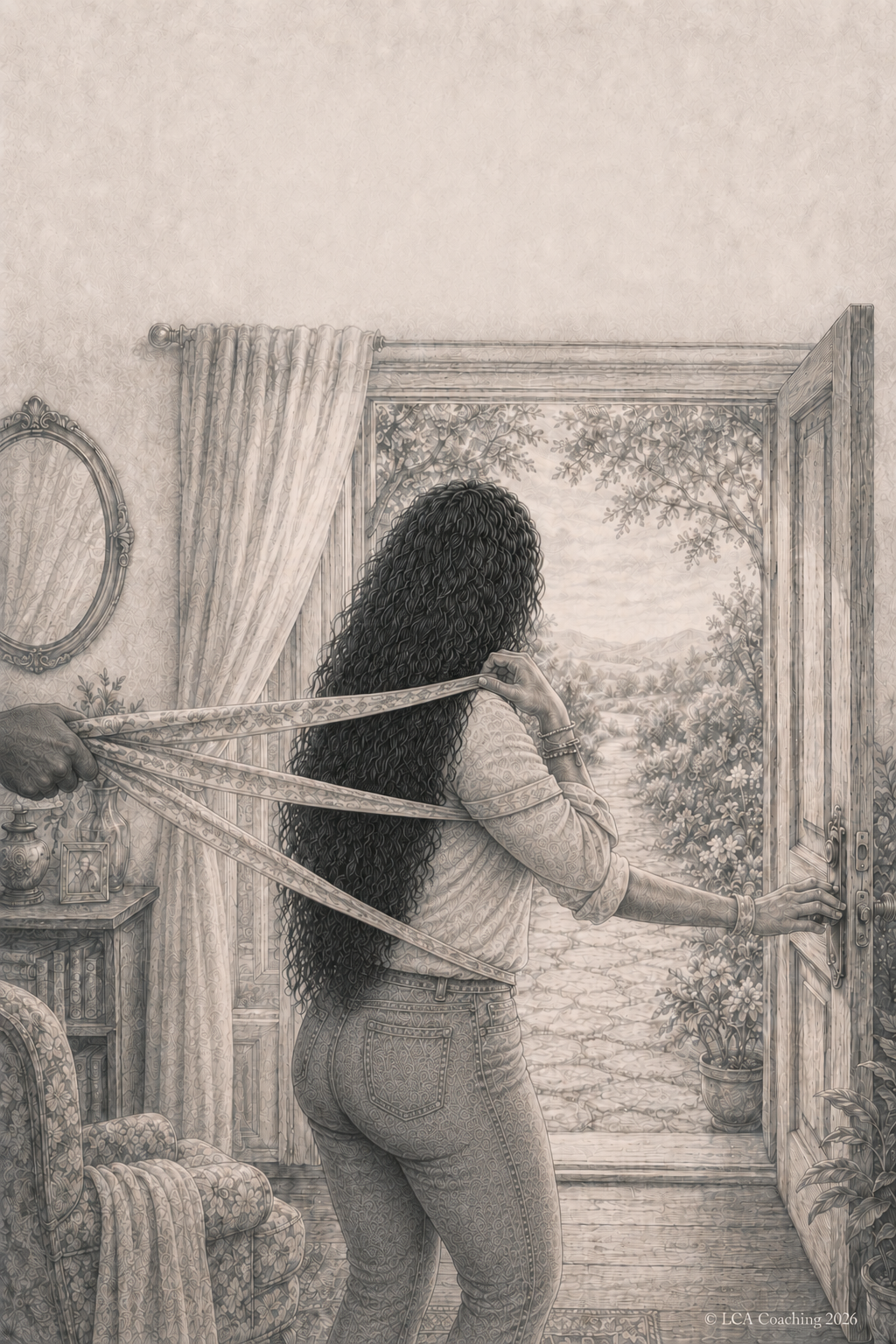
Some forms of control are easy to recognise.
They are loud. Threatening. Clearly restrictive.
But coercive control does not always announce itself that way. Sometimes it enters quietly, through relationships and environments that initially feel loving, protective, purposeful or safe.
It can sound like guidance.
It can look like concern.
It can be presented as loyalty, unity, obedience or commitment.
And because it often develops gradually, we may not immediately recognise the moment when support begins to interfere with our freedom.
Control can exist in many places
When we hear the words coercive control, we may first think of an intimate relationship. But controlling dynamics can develop anywhere there is trust, dependence, authority or a deep desire to belong.
They can exist between partners, within families, churches, workplaces, friendships and communities.
The language may change depending on the environment, but the underlying pattern can feel remarkably similar.
You are free, as long as your choices remain acceptable.
You may speak, as long as you do not challenge the system.
You may have boundaries, but only when those boundaries do not inconvenience someone else.
You may leave, but not without being made to feel afraid, disloyal, selfish, ungrateful or spiritually unsafe.
Over time, we may begin to doubt our own perception. We become increasingly focused on keeping the peace, avoiding disapproval or proving our loyalty. What began as connection can slowly become a place where we are expected to abandon parts of ourselves in order to remain included.
When belonging has conditions
Most of us carry a natural need for connection. We want to feel loved, accepted, guided and protected.
There is nothing weak or naïve about that.
But our need for belonging can make us vulnerable when another person or an entire system suggests that love and safety are only available in exchange for our unquestioning compliance.
The control may be subtle.
Questions are interpreted as disrespect.
Boundaries are treated as rejection.
Independence is called selfishness.
Disagreement becomes disloyalty.
Leaving is presented as betrayal.
We may still technically have a choice, but the emotional, relational, professional or spiritual consequences attached to that choice become so heavy that it no longer feels truly free.
When faith and control become entangled
I am a woman of faith. I value healthy fellowship, safe church communities and spiritual leadership that is willing to remain accountable.
I also believe our autonomy matters deeply.
God Himself respects our free will and gives us the freedom of choice. Our churches should reflect that same care for our dignity, agency and discernment.
Church grooming and spiritual coercion are real dangers. They do not always begin with obvious abuse. They may begin with special attention, increasing access, blurred boundaries or the suggestion that one person possesses a unique authority over someone else’s life and choices.
This does not mean that all guidance is control or that all authority is unsafe. Healthy spiritual leadership can offer wisdom without taking ownership of our decisions. It can invite trust without demanding unquestioning loyalty. It can hold space for questions without treating curiosity as rebellion.
We should not have to surrender our own voice in order to belong.
Healthy connection leaves room for autonomy
Healthy relationships do not require the disappearance of the self.
They make room for difference, reflection and choice. They allow us to pause, ask questions, reconsider and say no.
They do not punish us for listening to our own discomfort.
Healthy leadership does not need us to become smaller in order to preserve its authority.
Healthy guidance helps us think; it does not tell us that we are no longer allowed to trust our own mind.
Healthy accountability moves in both directions. It does not only apply to the person with less power.
This distinction matters in every environment: at home, at work, in our relationships and within our faith communities.
We can value connection without surrendering autonomy.
We can receive guidance without handing someone else ownership of our lives.
We can honour community without abandoning our discernment.
And we can love people while remaining attentive to what happens inside us when we are with them.
An invitation to contemplate
Think of a relationship, group or environment that carries influence in your life.
With gentleness and honesty, ask yourself:
Is there room for me to disagree without fearing punishment, rejection or humiliation?
Am I allowed to ask questions?
Are my boundaries respected, even when others do not understand them?
Do I feel supported in making my own choices, or pressured to make the “right” choice?
Can I remain connected without becoming smaller, quieter or less like myself?
Is accountability mutual, or does it only move in one direction?
What happens in my body when I consider saying no, stepping back or choosing differently?
Do I feel guided or managed?
Do I feel connected or controlled?
You do not have to force an immediate conclusion.
Sometimes awareness begins simply by noticing what happens within us: the tension in our body, the fear beneath our compliance or the voice we keep silencing to preserve our place.
That voice may not be disloyal.
It may be your discernment asking to be heard.
To take with you
Love does not require the surrender of our agency.
Guidance does not need to silence our voice.
Belonging should not cost us our freedom.
My faith is deeply important to me. And so is the freedom God gave me.
I will protect both.
Love is the foundation. Connection is what we build.
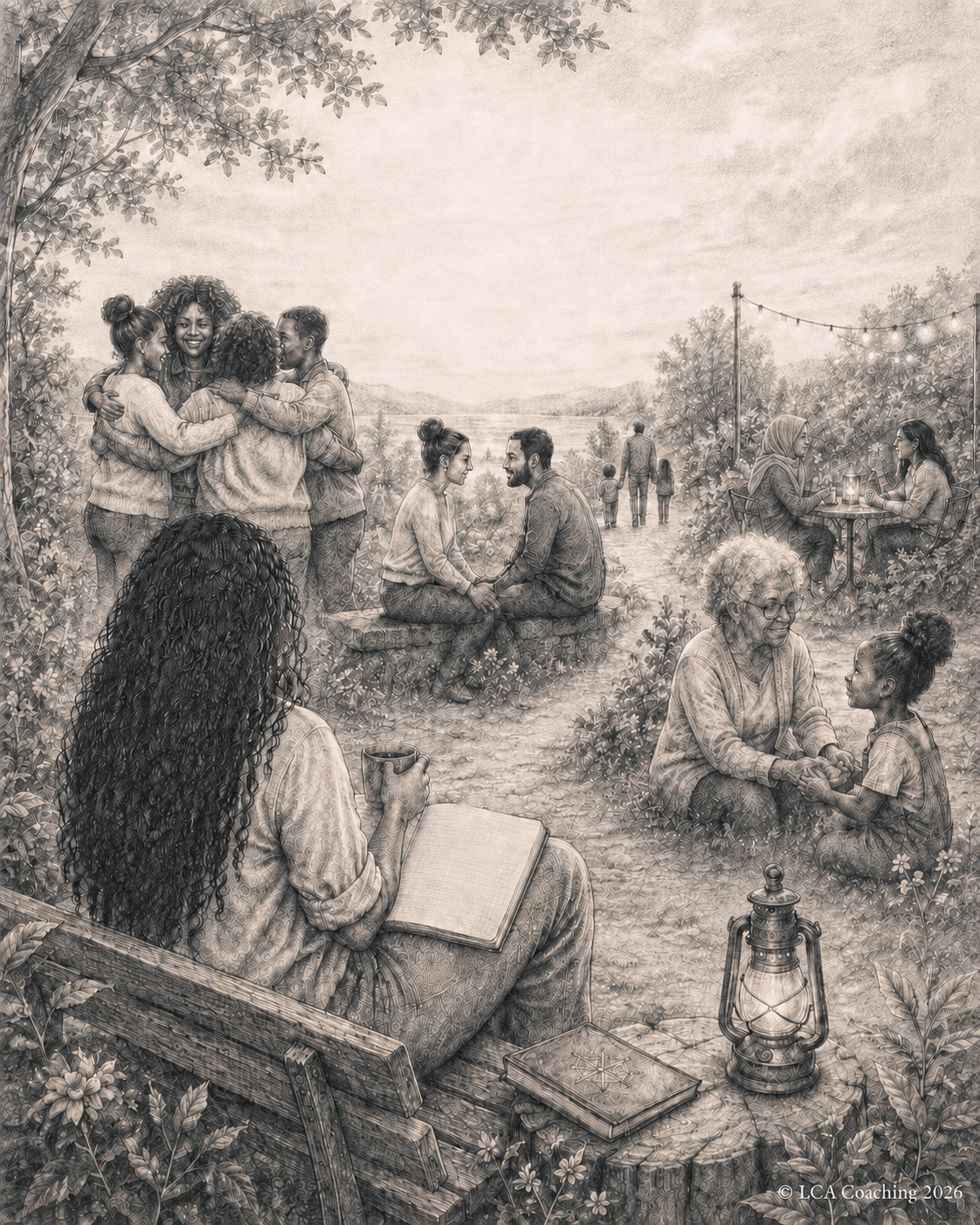
The older I get, the more I realise that healthy, lasting relationships are built on so much more than affection, history, chemistry, or simply caring about one another.
At their heart, they ask us to keep learning how to truly see each other.
Not only the parts that are easy to understand.
But the whole person.
Their hopes and fears.
Their strengths and vulnerabilities.
Their wounds and their growth.
Their needs.
Their boundaries.
Their humanity.
Healthy connection is not built through perfection.
It grows through curiosity.
Compassion.
Honesty.
Accountability.
And the willingness to stay present when something feels difficult.
It asks us to care not only about the relationship itself, but also about how we are relating to one another within it.
Can we speak honestly without using our words as a weapon?
Can we listen without making every difference a threat?
Can we make room for another person’s experience without abandoning our own?
Can we take responsibility for our impact without turning the conversation into blame?
Can we repair what has been hurt instead of only defending what we meant?
Can we allow boundaries to protect the health of the relationship, rather than seeing them as rejection?
And can we keep growing, both individually and in the way we meet one another?
Because dignity still matters in conflict.
Care still matters in disappointment.
Love does not excuse the ways we harm one another.
And accountability does not require us to shame one another either.
Perhaps one of the most important things I have learned is that caring about someone and knowing how to care for the relationship are not always the same thing.
Care can be something we feel.
Healthy connection is something we practise.
In the way we listen.
The way we communicate.
The way we repair.
The way we make space for one another.
The way we protect each other’s dignity without losing our own.
Love may be part of the foundation.
But healthy relationships are built in the small, repeated ways we choose to care for the connection.
And perhaps that is what gives our relationships somewhere safe to grow.
Lord, What Do You Want Me to See?
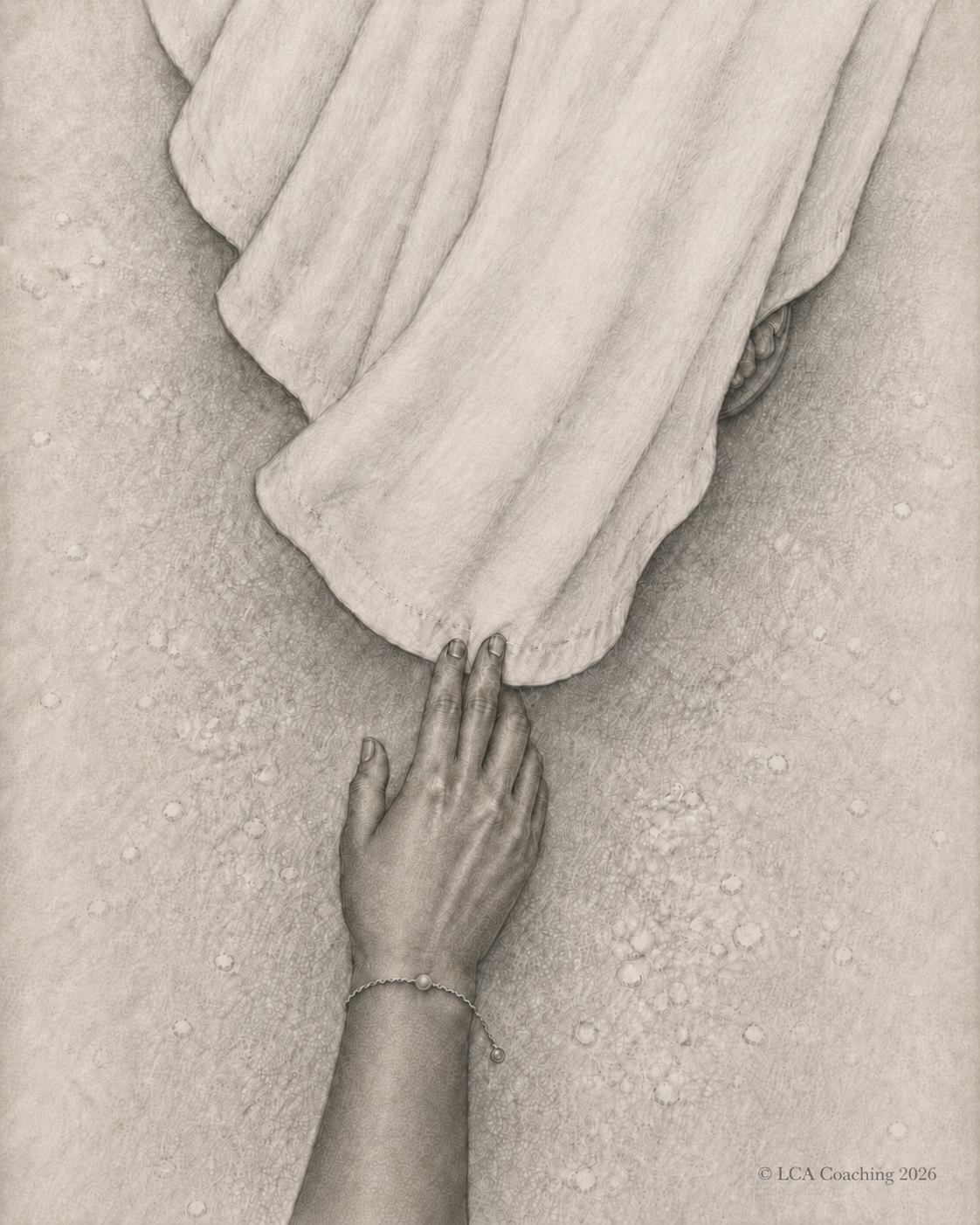
A few years ago, I moved to a new city to live closer to my work.
Like many people who move, I started looking for a new church home.
At first, every church felt like another possibility.
“Maybe this is the one.”
Every Sunday, I hoped I had finally found the place where I belonged.
But as the months passed, I became discouraged.
No matter how many churches I visited, none of them felt like home.
Eventually, I stopped looking.
I had made peace with following my old church online.
I remember thinking,
“I’m good, Lord.”
Then one day, while scrolling through Facebook, I came across a pastor I’d never heard of.
Out of curiosity, I clicked on his page.
When I saw the church’s address, I realized it was only ten minutes from my house.
And quietly, I sensed God whisper,
“Go here.”
My honest reaction?
“Not another church, Lord.”
I felt like I had already visited enough churches.
I wasn’t looking anymore.
But something in me knew I needed to go.
So I did.
And from the moment I walked through the doors, I sensed God gently saying,
“Welcome home.”
Looking back now, I realize that wasn’t the beginning of my story.
It was the end of a journey God had been leading me through all along.
Because before He brought me home…
He first led me into many different rooms.
At first, I thought every church was simply another attempt to find where I belonged.
But over time, my prayer began to change.
Instead of asking,
“Lord, is this where You want me to stay?”
I started praying,
“Lord… why did You bring me into this room?”
“What do You want me to see?”
“Teach me to see as You see.”
Because if I leaned on my own understanding, I knew exactly what I would do.
I would compare.
I would judge.
I would focus on what was different.
And I would completely miss what God wanted to reveal.
So I chose curiosity instead.
And slowly…
Every room began teaching me something different.
The Dutch Church
In one Dutch church, they lit a candle before every gathering.
It was a simple way of welcoming God’s presence.
There was no spectacle.
No performance.
Just a quiet sense of reverence.
Their worship was gentle.
Minimalistic.
Sacred.
I loved it.
The African Church
In an African church, everything felt different.
The praise was alive.
The worship felt primal.
Almost existential.
There was freedom to kneel.
Freedom to sit.
Freedom to move.
Freedom to simply be.
So I loved experiencing a place where people weren’t expected to conform to someone else’s expression of worship or prayer.
Everyone seemed free to respond to God’s presence in their own way.
The Dominican Church
Then there was a Dominican church.
My Spanish isn’t fluent enough to comfortably hold a conversation, but I can understand much more than I can express.
I walked in during the prayer meeting before the service.
The pastor prayed with such passion that it felt like his prayers alone could move mountains.
The praise carried a deep longing to be in God’s presence.
The people welcomed me with incredible warmth.
At one point, the pastor handed me his own Bible so I could follow along during Scripture.
It was entirely in Spanish.
I couldn’t understand every word.
But I didn’t need to.
I understood the gesture.
And somehow…
That felt like one of the most loving things he could have done.
Love has a language of its own.
This week, during a social event at my church, I found myself talking with someone about worship.
Naturally, the conversation turned to favorite worship leaders.
I asked him,
“Who’s your favorite?”
He smiled.
“I don’t really have one.”
Instead, he pulled out his phone and excitedly searched through one of his playlists.
Then he showed me one word.
Adullam.
He explained that it was a type of African worship he often listened to during his prayer time.
He told me,
“Search for Adullam. You’ll find all kinds of worship like this.”
I had never heard the word before.
At first, I was surprised.
But instead of dismissing something unfamiliar…
I became curious.
What I discovered wasn’t simply the meaning of a Hebrew word.
Adullam was the place where David fled before becoming king.
A cave.
The secret place.
A hidden place where God shaped David long before the world saw what He was preparing him for.
Today, many people describe an Adullam season as a season where God removes distractions…
where old wounds are healed…
where character is formed…
and where He prepares us for what comes next.
One phrase especially stayed with me.
“The place where God prepares kings before He presents them.”
That led me down another path.
I began listening to different Adullam worship videos.
What I discovered was something many people would call soaking worship.
A form of worship where there is no rush.
No pressure to perform.
No expectation to sing every word.
Just an invitation to linger in God’s presence.
I came across a woman leading worship.
She wasn’t trying to impress anyone.
She wasn’t performing.
She was simply dwelling with God.
As I listened, there were moments where her voice broke with emotion.
It felt deeply personal.
Like I wasn’t watching someone sing.
I was witnessing someone pouring out her heart before God.
I found myself staying much longer than I had planned.
Then something struck me.
For more than a year, one of the worship songs I kept returning to was Secret Place by Samuel Medas.
I intentionally kept returning to the secret place.
It became the place where I lingered with God.
The place where He was tending to me.
Restoring me.
Shaping me.
Doing new things within me.
It was the place that kept me going.
So discovering that Adullam is the secret place felt deeply personal.
Almost as if God was quietly whispering,
“I see you.”
“I’ve been with you here all along.”
Looking back now…
I no longer believe God was leading me from church to church because He wanted me to find the perfect room.
I think He was introducing me to different parts of His heart.
One room taught me reverence.
Another taught me freedom.
Another taught me that love transcends language.
Another reminded me of the foundation that shaped my faith.
Another introduced me to the beauty of lingering in His presence.
None of those rooms revealed all of God.
But each revealed something beautiful about Him.
These days, when I enter a new room, my prayer is different.
Not,
“Lord, do I belong here?”
But,
“Lord… what do You want me to see?”
Because sometimes the greatest gift a room offers isn’t that we stay.
Sometimes…
It’s that we leave seeing God a little more clearly than when we walked in.
Identifying the Real Wound
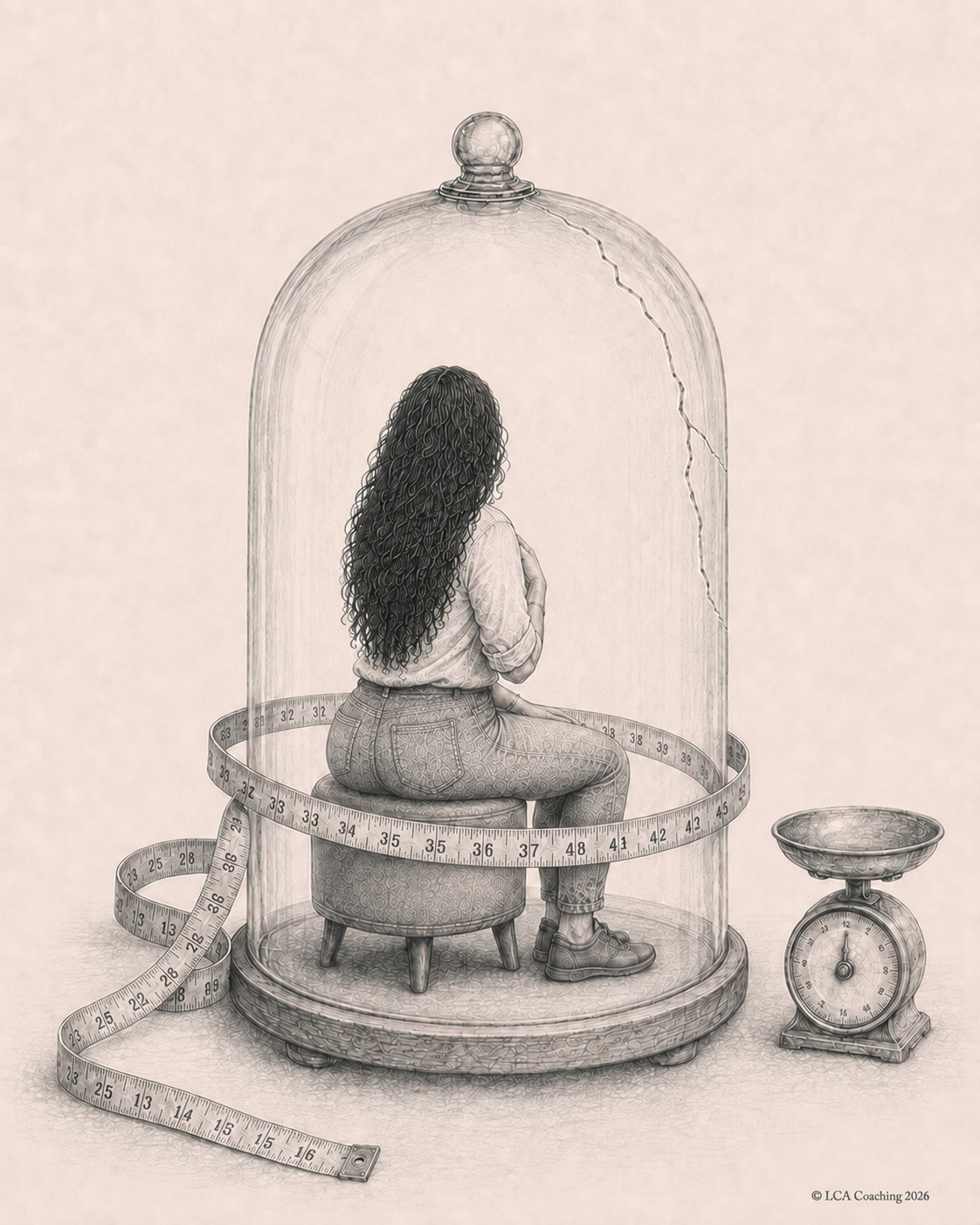
Today I’m going there.
There are parts of my story I don’t share because they’re dramatic.
I share them because they matter.
Throughout my life, my body has changed many times.
I’ve lived in smaller versions of my body.
I’ve lived in bigger versions of my body.
I’ve experienced being treated differently as my weight shifted.
For a long time, I thought my struggle was with my body.
Looking back, I don’t think it ever was.
My struggle was with what people projected onto it.
Comments disguised as concern.
Jokes disguised as honesty.
Advice I never asked for.
Over time, I began to notice something.
The comments people made often revealed far more about their relationship with bodies than they did about mine.
That realization brought me a great deal of freedom.
It also gave language to experiences I hadn’t fully understood before.
One of them happened during the passing of my biological mother.
Traveling to Aruba to attend her funeral wasn’t an easy decision.
Our relationship wasn’t simple.
There was love.
There was hurt.
There was distance.
There was grief.
I carried all of it with me.
Long before I boarded the plane.
One thing I’ve learned about myself is that I have a very sensitive nervous system.
When I’m carrying something heavy…
my body often carries it too.
I’ve made peace with that.
Because that’s how God created my body.
Instead of criticizing it…
I study it.
I try to understand what it’s carrying.
I ask what it needs.
I support it until it settles again.
I have a deep love and respect for my body.
Not because it has always looked the way I wanted.
But because it has faithfully carried me through every season of my life.
While I was grieving…
a lot of people took the opportunity to comment on my body.
“Don’t eat too much birthday cake, you’ll get too big.”
It was one of the hardest birthdays of my life.
Two days later, I would bury my biological mother.
I wasn’t thinking about cake.
I was trying to gather the strength to stand beside her grave.
“You’ve gained weight, haven’t you?”
“When I was younger, I used to be fatter than you.”
Each comment left me with the same realization.
Other people felt like my body was open for discussion.
Without my invitation.
Without my consent.
Looking back, I now understand why that felt so deeply unsettling.
It was a boundary violation.
I remember confiding in friends afterwards.
They were incredibly loving and supportive.
Some suggested,
“Let’s just watch what you eat.”
Others said,
“Let’s work out together.”
I knew they meant well.
But I also knew…
That wasn’t the heart of what I was struggling with.
I wasn’t at war with my body.
Weight loss wasn’t my focus.
I was focused on burying my biological mother.
It wasn’t my weight that was hurting me.
It was the boundary violation.
One thing I want to make clear is this.
I believe our bodies deserve reverence.
They deserve dignity.
I don’t comment on other people’s bodies.
Not because I think everyone is perfect.
But because I don’t know their story.
I don’t know their genetics.
I don’t know their overall health.
I don’t know the medications they take.
I don’t know the circumstances they’re navigating.
And I don’t believe I need to know.
Respect isn’t something people should have to earn by explaining themselves.
I’ve never felt entitled to make someone else’s body the topic of conversation.
Which is why the experience felt so incredibly confusing to me.
I knew something about it felt deeply wrong.
I just didn’t have the language for it yet.
Looking back, I realize I wasn’t looking for a solution.
I was looking for protection.
It was watching my brother model how to respond to a boundary violation that changed something in me.
When he witnessed someone mistreating me, he didn’t explain it away.
He responded by placing a boundary.
Watching that made me realize what I had actually needed all along.
It wasn’t weight loss.
It was boundaries.
Not because my body needed fixing.
But because my dignity deserved protecting.
Looking back, I don’t believe healing came from changing my body.
It came from protecting what I knew to be sacred.
That is the contemplation I’d like to leave you with.
Maybe the thing you’ve been trying to fix…
isn’t the thing that’s actually hurting.
Perhaps it looks like…
Weight management.
Body image.
Plastic surgery.
An eating disorder.
Perfectionism.
Achievement.
People-pleasing.
Unhealthy dynamics.
We often become consumed with changing what is visible…
while the deepest wound quietly lives somewhere else.
Sometimes healing doesn’t begin by asking,
“How do I fix this?”
Sometimes it begins by asking,
“What is it that’s actually hurting?”
We All Have the Right to Exist Safely
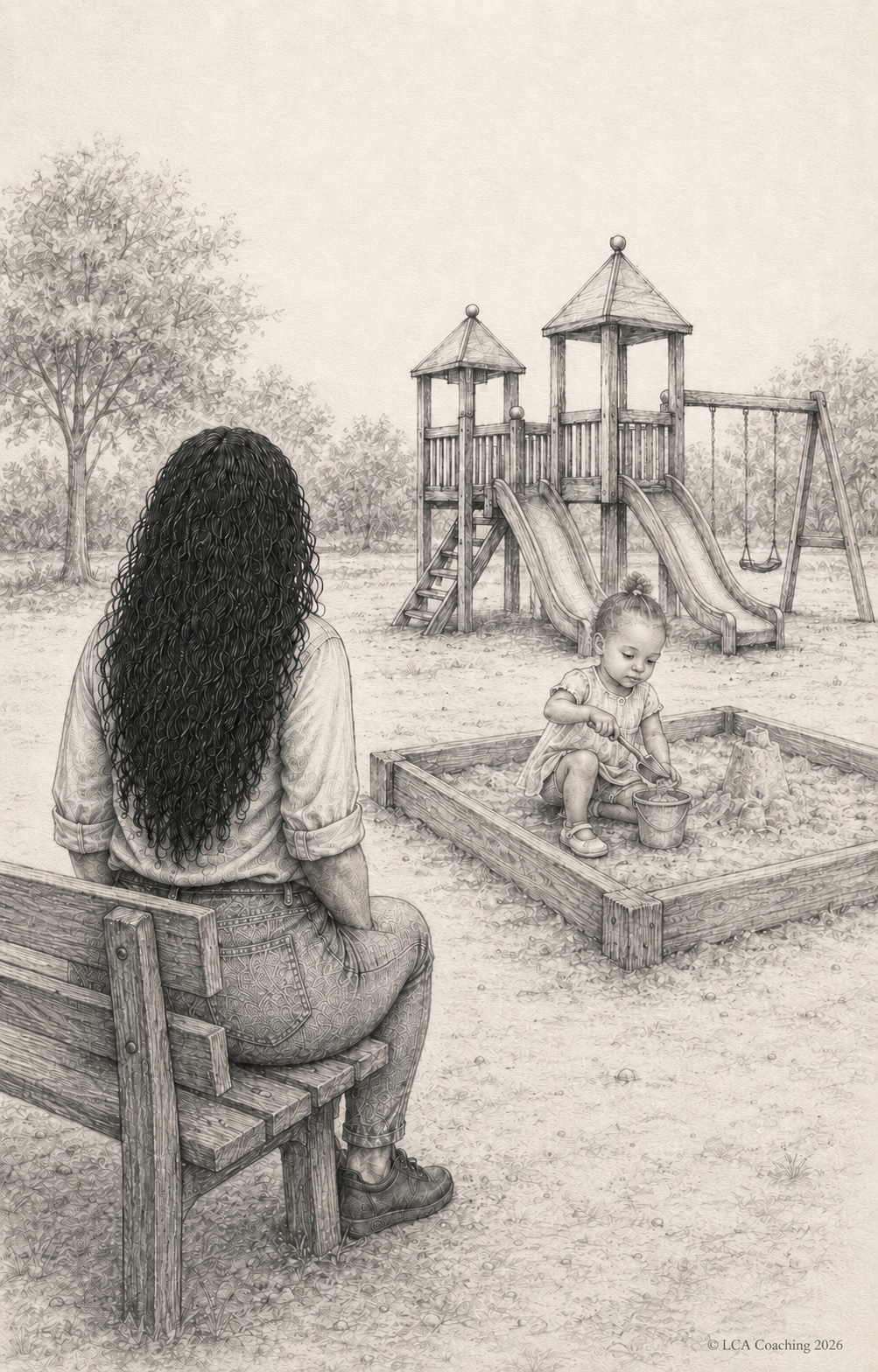
Today, I want to talk about an uncomfortable topic.
A topic that may be difficult to name, but that needs and deserves to be discussed:
The sexualisation of girls’ and women’s bodies.
This topic is deeply personal to me.
While writing this contemplation, I tried to remember the very first time I felt that my body was being sexualised.
At first, I thought I was eleven years old. But as I reflected more deeply, I realised that it had begun much earlier than that.
I remember what happened.
I remember the moment.
But I no longer remember my exact age.
I only know that I was very young.
As I grew older and my body began to develop into that of a curvy Caribbean girl, the sexualisation continued to take different forms.
There was inappropriate touching.
There were comments about my developing body.
And through all of it, I was still very much a child.
I was playful, innocent and often living in my own little world.
As an autistic child, I did not always understand the meaning behind people’s words, looks or behaviour. I did not understand what sexualisation was.
All of it was deeply confusing for me.
I did not always understand what people were saying or doing, or why they were doing it. I only remember that something about it did not feel right in my spirit.
I could feel that a boundary was being crossed, even before I had the language to name that boundary.
While I was still simply being a child, my body was already being interpreted through an adult gaze.
That can make attention feel unsafe.
Now, as a 37 year old woman, I understand more clearly what the younger version of me could feel but did not yet have the words to explain.
And yet, the sexualisation did not simply disappear when I became an adult.
Even now, simply preparing to go outside can sometimes feel like preparing for a mental war.
Will I have to defend myself against unwanted attention today?
Will I be able to enjoy a peaceful walk without being followed or harassed by a man I do not know?
If I tell someone to leave me alone, will he respect my answer?
Or will he continue to insist, as though my “No” is only the beginning of a negotiation?
Encounters like these can feel deeply unsafe for women because we do not know how the man approaching us will respond.
Will he respect my boundary?
Will he continue to follow me?
Will his interest turn into anger when I do not respond in the way he hoped?
What may seem like a harmless interaction to someone else can place a woman’s entire nervous system on alert.
That is why unwanted attention is not always experienced as flattering.
Sometimes, it feels like a situation we have to navigate carefully in order to remain safe.
I once had a man approach me at the gym and say:
“I’ve seen you for a very long time, shaking your ass whenever you walk by.”
And I remember thinking: I had never seen this man before in my life.
And just because I have an ass does not mean I am shaking it for anyone’s attention or entertainment.
I was simply walking.
Simply living.
Simply existing in my body.
But in his mind, the natural movement of my body had somehow become a performance intended for him.
That is what sexualisation can do.
It can turn a woman’s ordinary existence into an invitation she never extended.
Sometimes, a woman is not trying to attract you.
She is not performing for you.
She is not asking to be approached, followed or commented on.
She is simply existing.
Something happened last week that made me reflect on this subject even more deeply.
I was sitting near a playground, talking to a male friend, when two women arrived with their children.
At one point, one of the little girls needed to pee. Her underwear was removed, and she was allowed to continue walking around the playground with her private area uncovered, in the presence of people she did not know.
When I saw her, my heart broke for her.
Because children depend on adults to protect their privacy until they are old enough to understand why certain boundaries matter.
A child’s body is innocent. But we also live in a world in which not every adult looks at children with innocent eyes.
That is a painful reality to acknowledge.
I want to encourage parents and caregivers to remain aware of this and to be proactive in protecting their children’s privacy.
Please do not normalise children being exposed in public spaces or around people they do not know.
Not because there is anything shameful about a child’s body, but because children depend on us to protect their privacy and safety while they are still learning why these boundaries matter.
They rely on us to teach them that their body belongs to them, that their private areas deserve protection and that they are allowed to have boundaries.
The responsibility should never be placed upon the child.
It belongs to the adults around them to protect their innocence, privacy and safety.
And I would love for more men to understand what it can sometimes feel like for women to simply live and exist around them.
Not because men should be afraid to approach women, but because greater awareness can help create interactions in which women also feel safe and respected.
Attraction does not create entitlement.
Showing interest does not guarantee access.
A woman’s friendliness is not consent.
Her clothing is not consent.
The shape or natural movement of her body is not consent.
And when she says “No”, moves away or asks to be left alone, her boundary deserves to be respected without negotiation.
A woman should not have to hide her body, alter the way she walks or make herself smaller in order to feel safe.
The younger version of me was not trying to be desirable.
She was playing.
She was growing.
She was simply being a child.
And the woman I am today is still allowed to simply exist in her body without her existence being interpreted as an invitation.
We all deserve to move through the world with dignity, freedom and safety.
We all have the right to exist safely.
Care without carrying
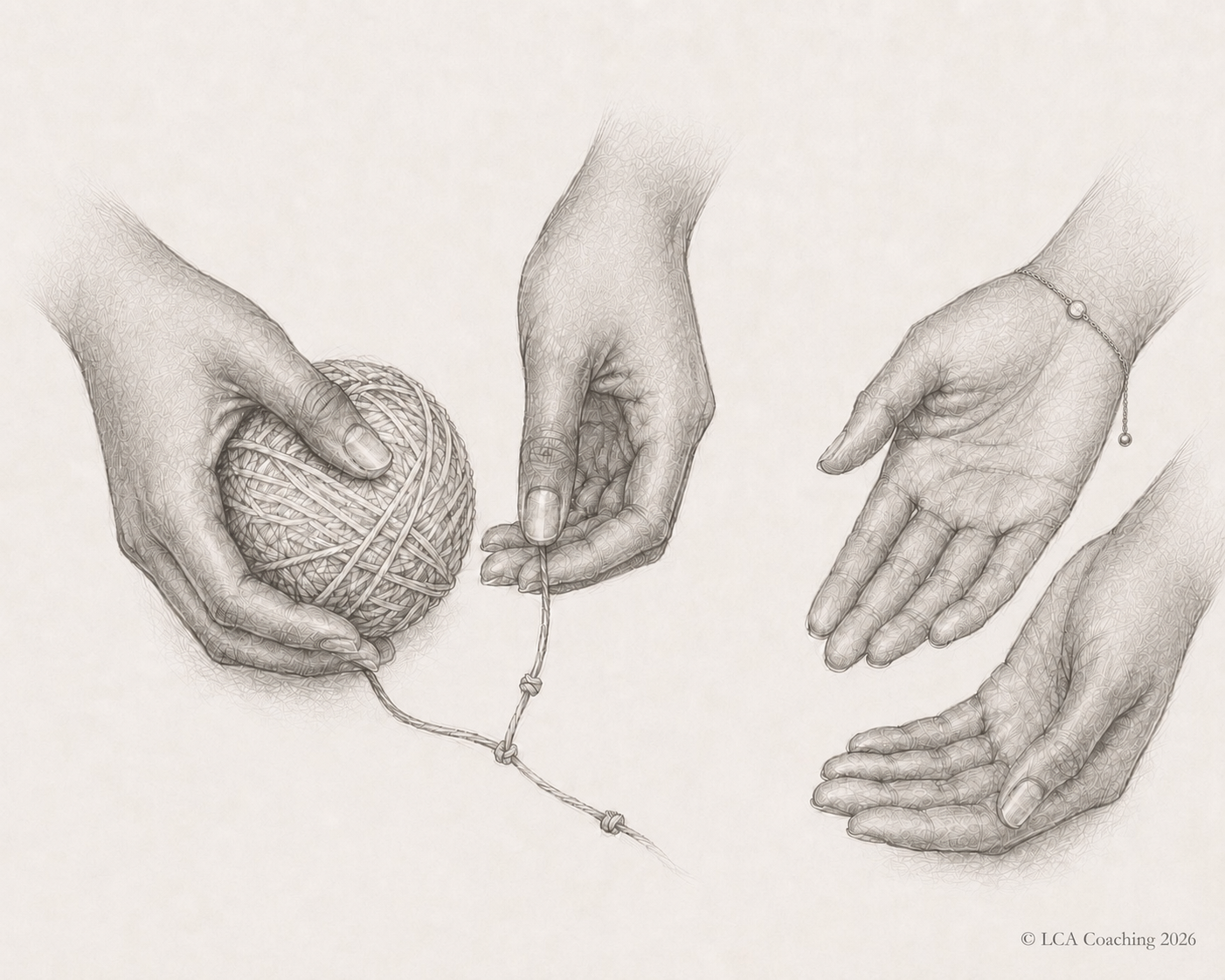
At LCA, we believe that healthy support looks like walking beside someone with care, without taking over the inner work that is theirs to do.
We can create a safe space.
We can listen.
We can witness what someone is carrying without turning away.
We can gently explore what lies beneath.
We can ask questions that make room for reflection.
We can offer insight, guidance and practical tools.
And through it all, the journey can remain in their hands.
Because walking beside someone is not the same as walking in their place.
Sometimes, our desire to help can quietly become pressure.
We may find ourselves reaching for an answer before the other person is ready to discover their own.
We may begin carrying responsibility for their healing, their choices or their next step.
We may hold their pain so closely that the line between caring and carrying begins to fade.
Not because we want to take away their voice, but because it can be difficult to witness someone we care about struggle.
Healthy support invites us to remain present while honouring the voice, pace and choices of the person beside us.
Their inner work can remain in their hands, without leaving them to face it alone.
We can witness without absorbing.
We can explore without taking over.
We can offer without pressuring.
We can care without carrying.
Sometimes, support looks like staying close.
Sometimes, it looks like making room.
And sometimes, it looks like trusting that the person beside us has a voice, a pace and a path of their own.
One of the most loving things we can say is:
“I am here. I will listen, witness and explore with you. I will walk beside you with care, while honouring the journey that remains yours to walk.”
When others don’t show up, stay present and meet yourself with care.
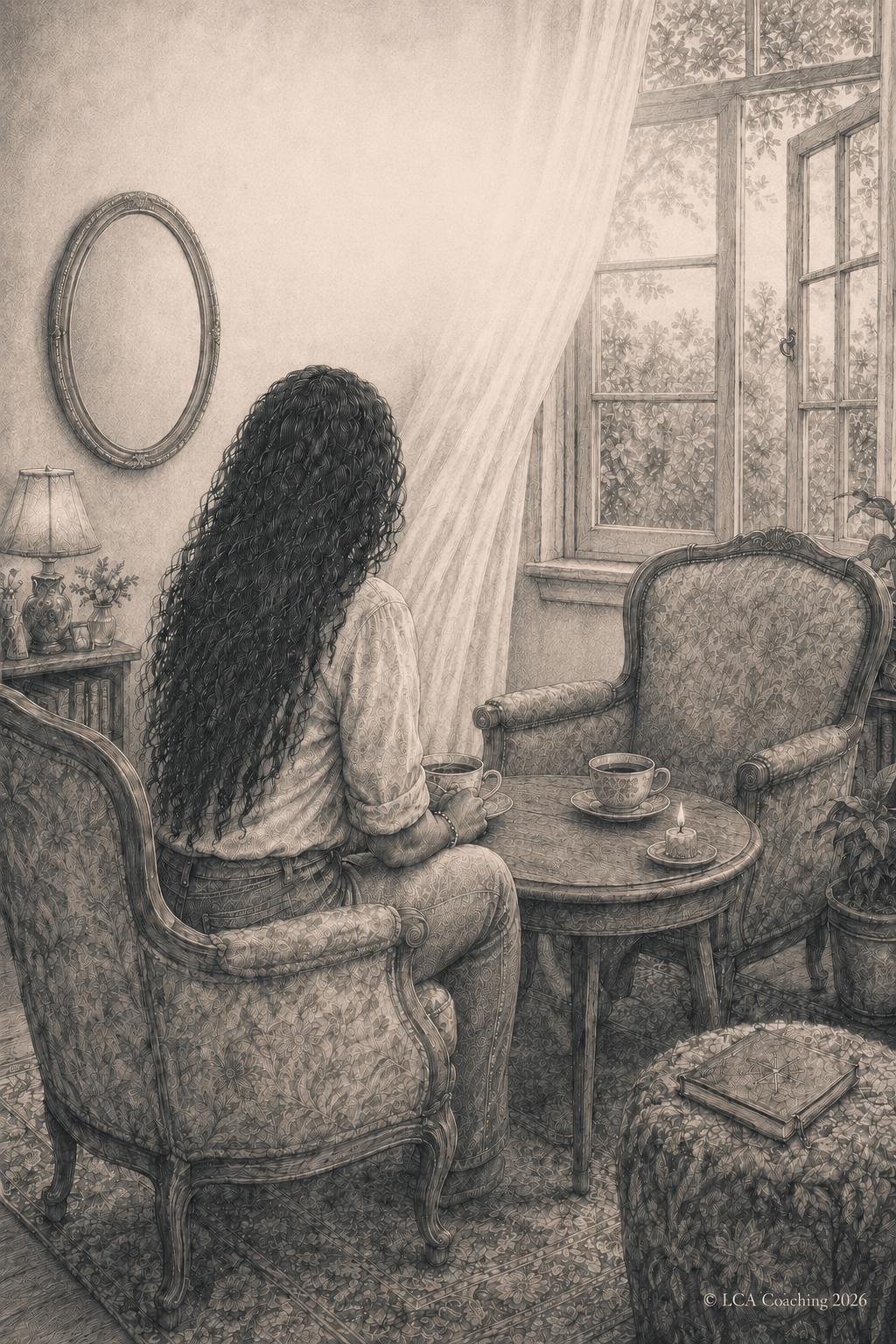
We cannot always choose how others show up for us.
There will be moments when someone cannot give us the care that we need.
When a parent cannot meet a need.
When someone we love does not understand what we are trying to say.
When a community does not make room for what we carry.
When a place or system does not protect us in the way that we need.
And those moments can hurt deeply.
Especially when the care, understanding or protection we are looking for matters deeply to us.
But sometimes, without realizing it, we respond to that hurt by moving away from ourselves.
We silence what we feel to preserve the peace.
We question our own experience because someone else does not see it.
We explain ourselves until we are exhausted, hoping to finally be understood.
We make ourselves smaller to preserve belonging.
We stay quiet when something within us is asking to be heard.
Not because we do not love or value ourselves.
Sometimes we learned that staying connected to others required us to disconnect from parts of ourselves.
But self-respect can invite us into something different.
To stay.
To stay present with what we feel.
To take our own experience seriously.
To listen when something within us says, this hurts, I need something, or this does not feel right.
To honor our needs even when someone else cannot meet them.
To let our boundaries matter even when someone else does not understand them.
And to remember that when care cannot come from where we hoped it would, we are still allowed to reach for it elsewhere.
Self-love is not learning to need no one.
It is learning that someone else being unable to meet us does not require us to leave ourselves behind.
Sometimes self-respect is speaking up.
Sometimes it is setting a boundary.
Sometimes it is asking for support.
Sometimes it is choosing not to explain ourselves any further.
And sometimes it is lovingly recognizing that we cannot keep asking ourselves to become smaller in order to remain somewhere.
We cannot always choose how others show up for us.
But we can learn to stay present.
To stand beside ourselves.
And to meet ourselves with care.
A question to reflect on:
When someone cannot meet me in the way I need, how can I stay connected to myself?
What do you choose when life gets hard?
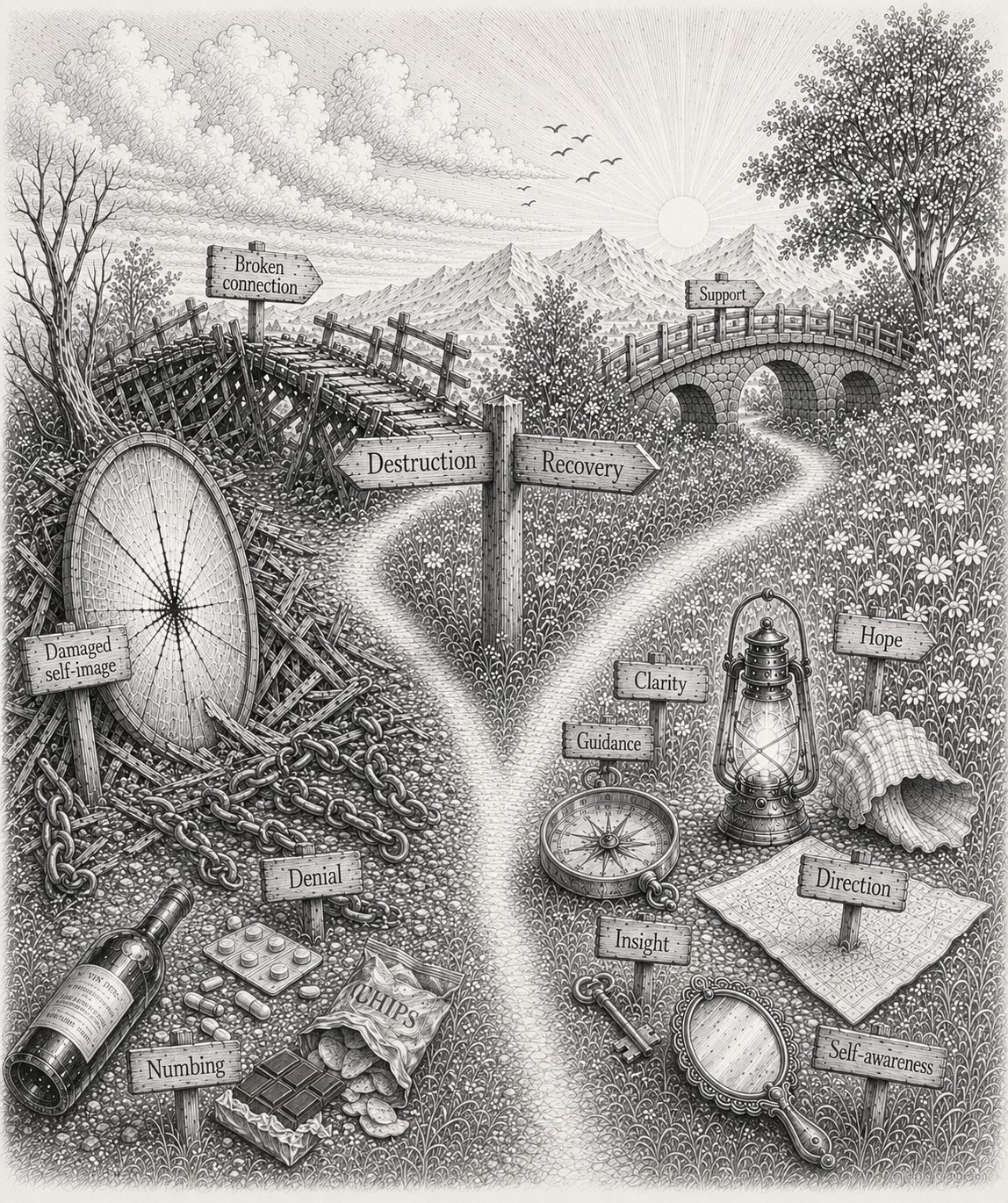
What do you choose when life gets hard?
What do you choose when you are hurt?
Not when life is easy.
Not when you are getting your way.
Not when you feel loved, understood and appreciated.
What do you choose under pressure?
I have come to believe that conflict reveals character more clearly than comfort ever will.
Pain can explain a reaction.
It does not automatically excuse it.
When you are hurt, do you become cruel?
Do you become reckless with other people’s trust?
Do you punish?
Do you retaliate?
Do you try to make someone else feel the pain you are feeling?
Do you become destructive?
Or do you remain accountable for how you treat others, even when you are angry, disappointed or wounded?
We all cope with pain differently.
Some people become reflective.
Some become direct.
Some withdraw to regulate themselves.
Some seek support.
Some allow pain to deepen their self-awareness.
And some become destructive.
They say things they cannot take back.
They burn bridges.
They expose confidences.
They weaponize vulnerability.
They retaliate.
They try to wound.
They create collateral damage.
Then, once the storm has passed, they apologize and expect the apology to erase what happened.
But apologies do not reverse consequences.
An apology can acknowledge harm.
It can demonstrate remorse.
It can create an opportunity for accountability and repair.
But it cannot undo what has already been done.
It cannot make exposed information private again.
It cannot immediately restore broken trust.
It cannot erase the moment someone realized that, when you were hurt, their safety became negotiable.
Repair requires more than regret.
It requires honesty.
Accountability.
Changed behaviour.
Respect for the other person’s boundaries.
And an acceptance that forgiveness does not always lead to reconciliation.
The older I get, the less interested I am in what connects people on paper and the more interested I am in what sustains relationships in practice.
Shared history is not the same as shared values.
Blood relation is not trust.
Love is not automatically respect.
And access is not entitlement.
A relationship can contain love and still be unsafe.
Two people can share years of memories and still discover that they do not share the same understanding of loyalty, accountability or care.
Not every damaged relationship should be repaired.
Some relationships suffer from misunderstanding and deserve an honest conversation.
Some suffer from incompatibility and deserve acceptance.
Some can be repaired, but only when both people are willing to take responsibility for their part.
And some reveal truths that cannot be unseen.
There are moments when conflict does not merely expose a problem within the relationship. It reveals something fundamental about how a person responds when they feel powerless, rejected, challenged or hurt.
That does not mean people are incapable of growth.
People can learn healthier ways to cope.
They can become more self-aware.
They can take responsibility.
They can repair patterns that once caused harm.
But growth cannot be built on denial.
You cannot change what you refuse to acknowledge.
And no one is required to remain close enough to witness your transformation.
Sometimes the most honest response to a damaged relationship is repair.
Sometimes it is distance.
Sometimes it is grief.
And sometimes it is accepting that love alone is not enough to make a relationship safe, respectful or sustainable.
So when life gets hard, pause before you act.
Ask yourself:
Am I trying to communicate, or am I trying to punish?
Am I protecting myself, or am I deliberately trying to cause pain?
Am I responding from my values, or reacting from my wounds?
Will I still be able to stand behind this choice once the intensity has passed?
Because pain may not always be a choice.
But what you do with it matters.
The question is not whether you will ever feel hurt, angry, betrayed or disappointed.
You will.
The question is:
What do you choose when life gets hard?
And what do those choices reveal about the person you are becoming?
Care Enough to Reach Back
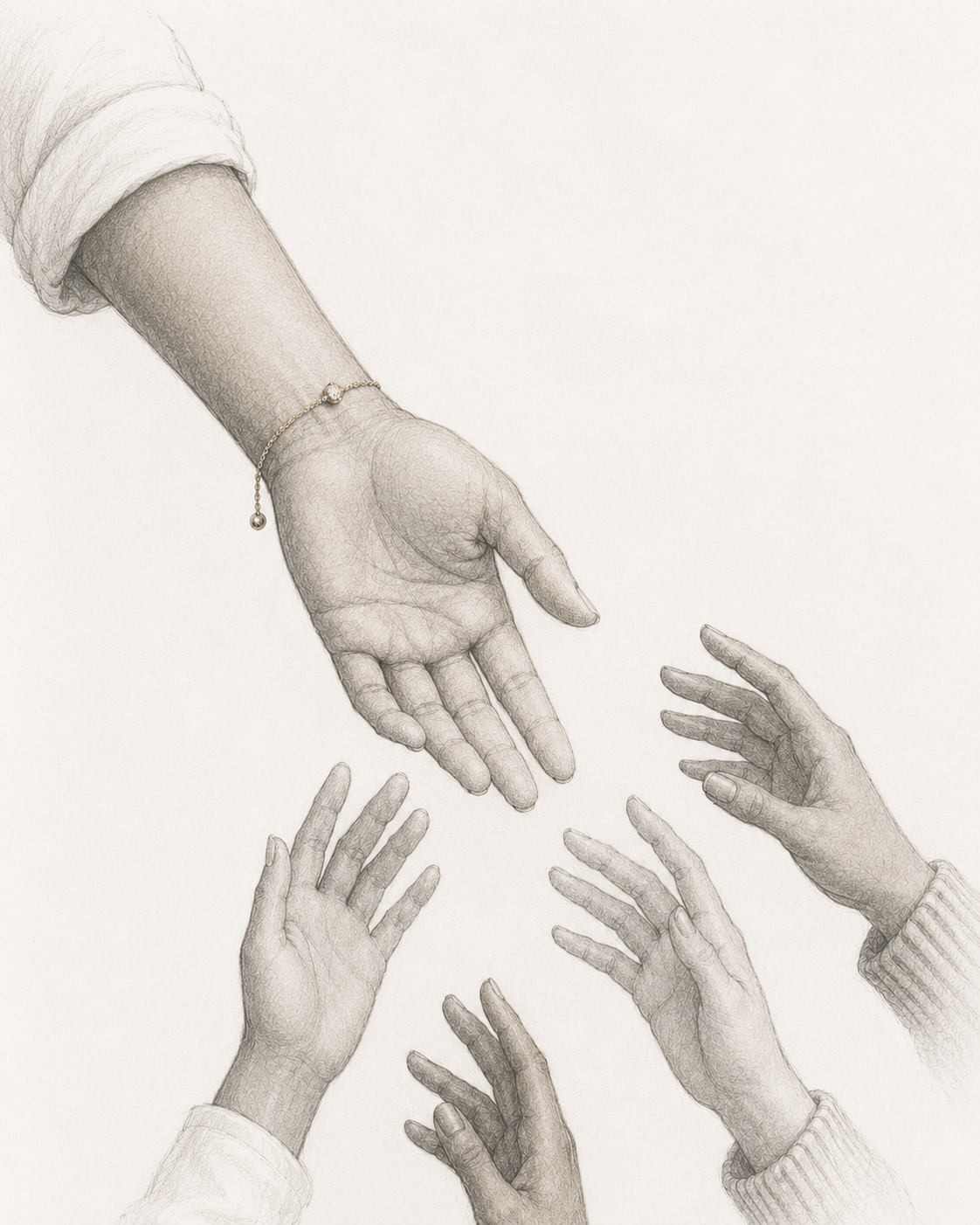
One thing I struggle to understand is watching someone endure the same hardships you once survived and choosing not to offer even a word of guidance.
Especially when it happens between generations of women.
Not every older woman is responsible for mentoring every younger woman. No one owes another person unlimited access, emotional labour, rescuing or self-sacrifice.
But there is a difference between having boundaries and becoming indifferent.
There is a difference between allowing someone to learn through her own experiences and knowingly watching her walk into avoidable harm without saying anything.
Sometimes the response is:
“I had to figure it out on my own, so she should too.”
But why should suffering have to repeat itself simply because it happened before?
Why should pain become a tradition?
If you survived experiences that cost you years, confidence, opportunities or peace, should the goal not be to pass down what you learned?
To say:
“I recognise this road.
I cannot walk it for you, but I can tell you where some of the landmines are.”
That is not rescuing.
That is care.
Wisdom is not only being able to say, “I’ve been there.”
Wisdom is being able to say:
“I’ve been there, and because I care about you, I do not want you to suffer unnecessarily when something I have learned might help you.”
Not because life should be easy.
Not because every struggle can or should be prevented.
Some lessons can only be learned through experience. Some decisions must be made for ourselves. And advice is not always accepted, even when it is offered with love.
But there is a difference between respecting someone’s autonomy and withholding support out of hardness.
There is a difference between saying, “She has to live her own life,” and secretly believing, “She should suffer because I suffered too.”
Pain does not become wisdom simply because we survived it.
Sometimes pain makes people more compassionate.
Sometimes it makes them protective.
And sometimes, when it has never been tended to, it becomes a reason to withhold from others what they once desperately needed themselves.
I do not say that with anger.
I genuinely hope those women heal.
Because the belief that another woman must struggle alone simply because you did often comes from a place that was never cared for.
Perhaps no one guided you.
Perhaps no one protected you.
Perhaps you had to become your own mentor, your own encouragement and your own safe place.
That was unfair.
But another woman’s struggle will not repair what happened to you.
Making the road harder for her will not make your own journey more just.
Healing gives us a different choice.
We can decide that what wounded us will not be what we pass down.
We can turn survival into guidance.
Experience into wisdom.
Pain into protection.
To younger women: do not expect every older woman to have your back.
Some will see your potential and feel threatened by it.
Some will project their pain onto you.
Some will remain silent when they could have spoken.
But some will reach for you.
They will share what they learned without trying to control your life.
They will warn you without frightening you.
They will correct you without humiliating you.
They will celebrate your growth without making it a competition.
They will not need you to suffer in order to prove that you deserve what they know.
Treasure those women.
Listen to them.
Honour them.
And remember what their care felt like.
Because one day, another woman may be standing where you once stood.
You will not be required to save her.
You will not have to carry her.
But you may have something that could make her path a little safer, a little clearer or a little less lonely.
When that moment comes, do not become so attached to your survival story that you make unnecessary suffering a rite of passage.
Be the woman who says:
“I know this road.
Take what I learned with you.”
Care enough to reach back.
How do you know when a coach, therapist, mentor, church, community, support group, or program is right for you?
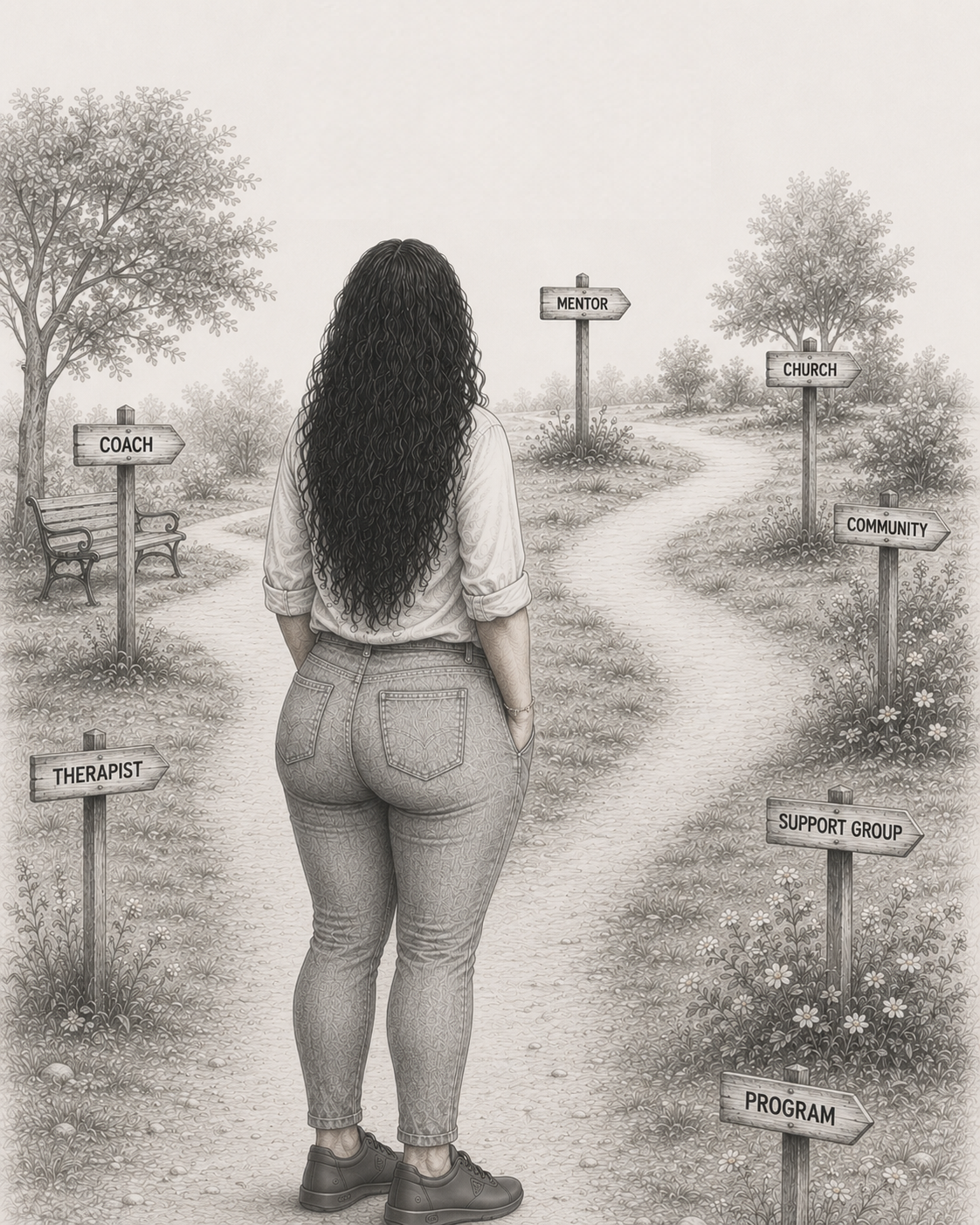
How do you know when a coach, therapist, mentor, church, community, support group or program is right for you?
Over the past few years, I have worked with different coaches, mentors and support professionals.
Some inspired me.
Some challenged me.
Some gave me valuable insight.
Some walked with me through difficult seasons.
And some helped me understand what I do and do not need from the people and spaces I turn to for support.
What I have learned is that finding the right support is not only about qualifications, expertise, reputation or success.
Those things matter.
But so does fit.
So do values.
Pace.
Worldview.
Boundaries.
Emotional safety.
And whether there is enough room for you to remain yourself.
I have learned that I can genuinely admire someone and still recognise that their approach is not right for me.
I can respect someone’s work and still feel overwhelmed by their pace.
I can appreciate someone’s wisdom and still disagree with their assumptions about people, success, faith, healing or what a meaningful life should look like.
I can acknowledge that something has helped many others and still decide that it is not what I need.
That does not make the person ineffective.
And it does not make me resistant, difficult or ungrateful.
It may simply mean that the fit is not right.
The right support should not require you to abandon your own discernment in order to receive it.
It should not make you feel that asking questions is disloyal.
It should not pressure you to move faster than you are able to move.
It should not turn one person’s experience, belief system or method into the only acceptable path.
Healthy support does not ask you to disappear.
It creates enough safety for you to become more honest about who you are.
That does not mean you will always feel comfortable.
Good support may challenge you.
It may confront patterns you would rather avoid.
It may invite you to take responsibility, make difficult decisions or sit with truths that are painful to acknowledge.
But there is a difference between being challenged and being diminished.
Between discomfort that supports growth and discomfort that repeatedly violates your boundaries.
Between someone guiding you and someone trying to control you.
Between accountability and shame.
Between encouragement and pressure.
One of the most important lessons I have learned is that a healthy support relationship is not built on one person having all the answers.
It is built on trust.
On honesty.
On consistency.
On feeling seen without being reduced to someone else’s interpretation of you.
On feeling safe enough to tell the truth, disagree, ask questions and change your mind.
It is built on knowing that the other person is willing to say:
“This is where I can help.”
And, just as importantly:
“This is where my knowledge, role or expertise ends.”
There is safety in being supported by someone who knows their limitations.
Someone who does not pretend that confidence is the same as competence.
Someone who does not use charisma to cover a lack of care, accountability or appropriate boundaries.
Someone who is willing to refer you elsewhere when your needs fall outside what they can responsibly offer.
Looking back, the person who helped me most during one of the hardest periods of my life was not the one with the biggest platform, the most followers or the most impressive personal brand.
She was someone who showed up consistently.
Someone who listened.
Someone who acknowledged what I was going through without trying to force meaning onto it.
Someone who offered support without pretending to have all the answers.
She did not make herself the centre of my healing.
She did not need to be the hero of my story.
She simply made it easier for me to hear myself again.
The older I get, the more I value that.
Not perfection.
Not performance.
Not charisma.
But presence.
Integrity.
Humility.
Consistency.
And the freedom to remain connected to my own voice.
The right support will not always tell you what you want to hear.
But it should help you become clearer, not more confused.
More grounded, not increasingly dependent.
More able to trust yourself, not less.
More honest, not more afraid.
Sometimes the greatest gift another human being can offer is not a solution.
It is a safe place to land while you find your own way.
So perhaps the question is not only:
“Is this person knowledgeable?”
But also:
“Can I be honest here?”
“Can I ask questions here?”
“Can I disagree without being punished?”
“Are my boundaries respected?”
“Does this support help me become more grounded in myself?”
“And does this person know when they are no longer the right person to help me?”
Because the right support should not take you further away from yourself.
It should help you return to yourself with greater clarity, courage and care.
Have you ever been supported by someone who taught you something important, not because they were perfect, but because their presence gave you what you needed in that season?