
Self-Protection Does Not Require Self-Abandonment
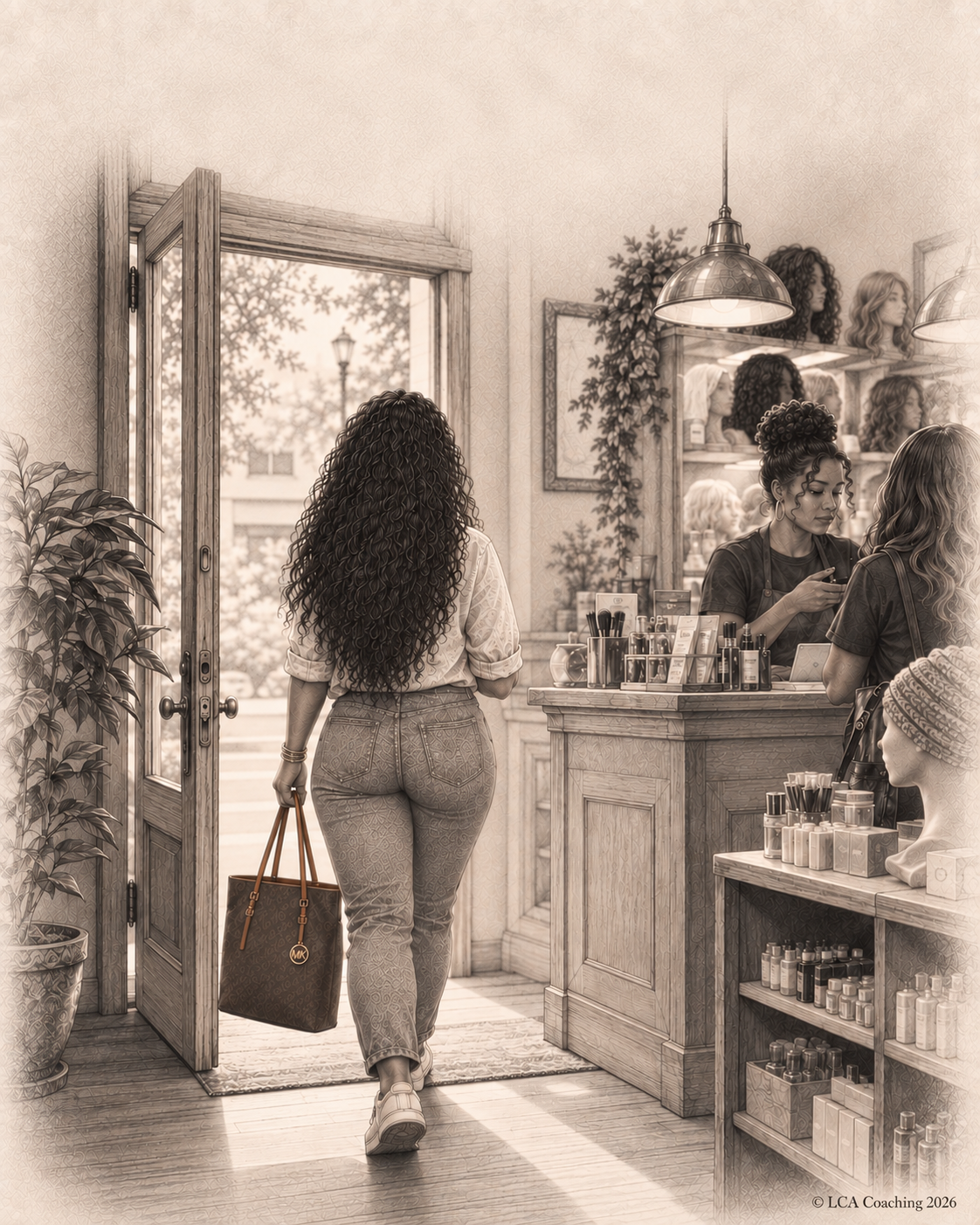
An LCA Contemplation on Protecting Ourselves Without Losing Ourselves
At LCA, we believe that learning to protect ourselves should not require us to become someone we are not.
Assertiveness does not have to look the same on everyone.
For one person, it may mean clearly saying, “That is not okay with me.” For another, it may mean ending a conversation, declining a request, changing their mind or simply leaving.
The expression can be different while the function remains the same: to protect ourselves, our boundaries and our dignity in a healthy way.
Assertiveness does not become more valid because it is louder, sharper or more confrontational.
And it does not become less valid because it is quiet.
What We Learn to Call Strength
We are surrounded by ideas and messages about what it means to be strong.
“Develop thicker skin. Stand your ground. Don't let anyone disrespect you. Put people in their place. Make sure they know they cannot mess with you.”
At their core, many of these messages are about learning how to protect ourselves from pain and mistreatment.
Self-protection and self-preservation are necessary parts of moving through the world. We need boundaries. We need to be able to say no, speak up and respond when someone crosses a line.
But somewhere along the way, assertiveness can become confused with hardness.
The person who speaks the loudest can appear the strongest. The person who immediately confronts someone can appear the most assertive. The person who seems unaffected by other people's behaviour can appear to have the thickest skin.
But none of those things, by themselves, tell us whether someone is protecting themselves in a healthy way.
And they certainly do not tell us what our own assertiveness needs to look like.
We have to figure that out for ourselves.
I am naturally a gentle and kind person. I like to give people space to be themselves. I like to be understanding and considerate. And most of the time, I am perfectly happy living in my own little bubble, letting people be who they are and getting on with my own life.
There is nothing wrong with that part of me. It is a part of myself that I value and want to keep.
But I have also learned that not everyone will treat that gentleness with care.
Some people will take advantage of it. Some will cross boundaries or continue pushing when nothing stops them.
And I realised that living peacefully also required healthy assertiveness.
Not Every Model of Assertiveness Has to Become Ours
When we are learning something new, it makes sense that we look to other people for examples. Assertiveness is no different.
We may learn from someone who is very direct. Someone who confronts quickly. Someone who has learned to protect themselves by becoming tougher, sharper or more forceful.
But not everything that is presented to us as assertiveness is healthy assertiveness.
There is a difference between being direct and being cruel. Between setting a firm boundary and belittling someone. Between standing up for ourselves and trying to put someone else beneath us.
And sometimes the difference is not even in the boundary itself, but in how we communicate it.
Our tone. Our attitude. The way we speak to someone. Whether we communicate with them as an equal or begin correcting, scolding or speaking down to them as though they are a child who needs to be put in their place.
We can be clear without being demeaning. We can be firm without becoming punitive.
We can tell someone that their behaviour is not acceptable without treating them as though they are beneath us.
Protecting our own dignity does not require us to disregard someone else's.
That distinction is important to me.
For a while, I became much more willing to confront people when they crossed a line. I told people when I did not like the way they were treating me.
Sometimes, that was exactly what I needed to do. But I also noticed how much energy it could take.
The tension. Finding the words. Preparing for the response. Sometimes continuing an interaction I did not even want to have because I felt I needed to make the other person understand that what they had done was not okay.
That is too much responsibility for us to carry.
We are responsible for who we are, the choices we make and how we respond. We are not responsible for making another person understand, agree with us or choose differently.
And sometimes, we do not need to communicate a boundary at all.
Sometimes we can simply recognise:
“This does not feel good to me. I do not want to continue this interaction.”
And leave.
No explanation. No confrontation. No attempt to correct the other person or make them understand what they did wrong.
At LCA, we believe healthy assertiveness is about becoming better at protecting ourselves while remaining responsible for our own behaviour.
Sometimes that means speaking. Sometimes it means saying no. Sometimes it means addressing something directly.
And sometimes, it simply means leaving.
Assertiveness Can Look Different
I worked with a woman who showed me another expression of assertiveness. She was kind and gentle, but also clear.
When something needed to be addressed, she addressed it. When something needed to change, she acted.
She did not seem interested in putting people in their place. She did not make herself smaller either. She simply acted.
Watching her expanded my understanding of what assertiveness could look like.
Not because her way now had to become my way, but because I realised there was no single way it was supposed to look.
My assertiveness does not have to look like yours to serve the same purpose.
One person may speak firmly. Another may leave. One may confront. Another may disengage. One may say exactly what happened. Another may decide that the interaction no longer deserves their participation.
Different expressions can serve the same healthy function: protecting our boundaries, our dignity and ourselves.
Understanding Does Not Require Tolerating
Sometimes people become harder because life taught them that hardness kept them safe.
Perhaps softness once felt unsafe. Perhaps vulnerability was punished. Perhaps the armour made sense when it was built.
I can have compassion for that. But understanding where someone's behaviour may come from does not require us to tolerate it. We do not have to accommodate it.
And we do not have to borrow someone else's armour to learn how to protect ourselves.
I have experienced women being harsh, mean and cruel with other women under the guise of assertiveness. I have seen the subtle ways comparison, insecurity and resentment can find their way into how women treat one another.
I do not want to water that down.
I have seen it. I have experienced it. And I do not believe we need to treat each other this way.
One of the biggest shifts for me has been realising that standing up for myself does not always mean having something to say.
Not every uncomfortable interaction requires confrontation. Not every act of disrespect requires a lesson.
Sometimes I can simply act.
I can leave. I can decline. I can stop participating. I can change my mind. I can withdraw access.
There will still be times when I choose to speak. Sometimes speaking up is exactly what the situation requires.
But I no longer need confrontation to prove that I stood up for myself.
Sometimes the boundary is simply what we do next.
We Get to Own Our Exits
I value kindness and treating people with dignity.
But somewhere along the way, politeness became more than something I valued. It became a moral obligation.
I thought even my exits had to be polite.
I would soften and overexplain. If I simply walked away, stopped explaining or allowed someone to think I was rude, it could feel as though I had failed at being a good person.
So even when something inside me was saying, “I want to go,” I didn't always know when or how it would be appropriate to make an exit.
I learned that there is a difference between politeness as an expression of who I am and politeness as an obligation that requires me to override myself.
I can value politeness without making it a requirement in every interaction.
Sometimes I will explain. Sometimes I will say goodbye.
And sometimes I will simply leave.
I do not have to make my exit comfortable for someone else in order to give myself permission to leave.
Staying on Our Own Side
We will not always respond the way we wish we had.
There may be moments when we freeze, overexplain, stay longer than we wanted to or only recognise our boundary afterwards.
Learning to protect ourselves should not become another reason to be hard on ourselves.
Sometimes we need to be able to look back and say:
“I wish I had left.
I understand why I wanted to.
And I forgive myself for staying.”
Because staying on our own side also means staying there after the moment has passed.
There is no single personality we have to develop in order to become assertive.
We all need ways of protecting ourselves that are healthy, effective and aligned with who we are.
For me, that means I can remain gentle and kind while becoming increasingly willing to act when something is not right for me.
For someone else, that may look different.
The goal is not to look assertive.
The goal is to know how to protect ourselves without losing ourselves in the process.
