
We don’t exist to be consumed
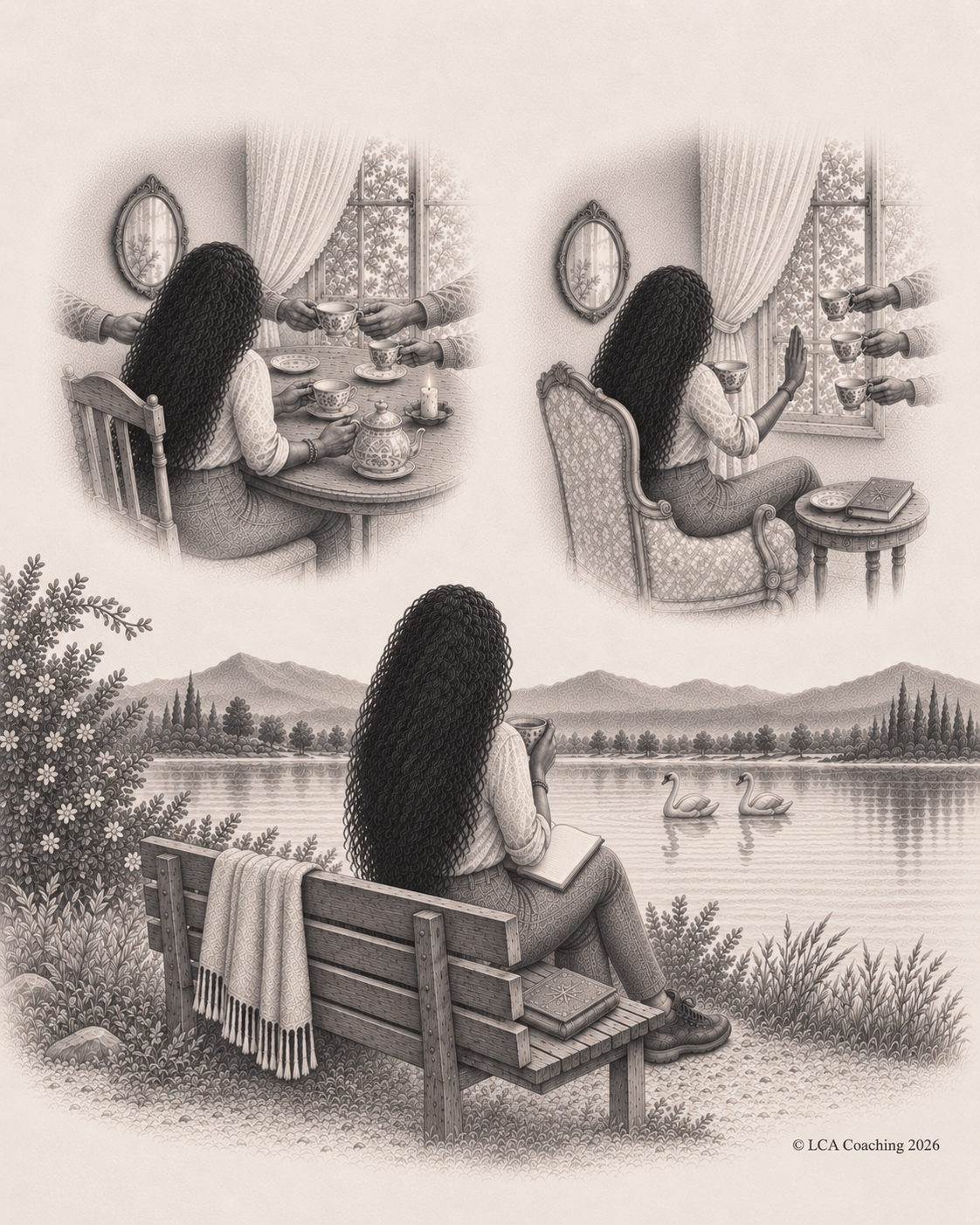
We Don’t Exist to Be Consumed
LCA Contemplation
There are many beautiful things we can offer one another.
Our warmth. Our attention. Our care. Our time.
Our knowledge. Our emotional presence. Our hospitality.
Our willingness to listen, nurture, help and carry.
These things are part of what makes relationships feel safe, meaningful and deeply human.
But something changes when what is freely given begins to be treated as something that is owed.
When kindness becomes availability.
When care becomes responsibility.
When generosity becomes expectation.
When being capable becomes you can handle one more thing.
When being warm becomes you should always make room for me.
And we do not always realize that this shift has happened until we say:
No.
When care becomes an expectation
There is a difference between receiving someone’s warmth and feeling entitled to it.
We may not notice when we cross that line.
Someone has always answered our calls, so their silence suddenly feels personal.
They have often made room for our emotions, so their boundary feels like rejection.
They have shared openly with us before, so we assume we are entitled to know what is happening in their life now.
They have helped us many times, and somewhere along the way, we stop asking whether they actually have the capacity to help again.
Familiarity can quietly create expectation.
What was once appreciated becomes familiar.
What becomes familiar can start to feel expected.
And expectation can quietly turn into entitlement.
But previous access does not guarantee continued access.
Someone having given before does not mean they are required to keep giving.
Warmth is still voluntary.
Care is still something another human being chooses to offer.
We deserve to be met, not only needed
There is something deeply human about wanting to be useful to the people we love.
To support them. To comfort them. To be someone they can turn to.
But there is a difference between being valued as a person and being valued primarily for what we provide.
We often discover that difference when we stop providing something.
When we say no. When we become tired. When we need support ourselves.
When we are no longer the person holding everything together.
It can be painful to discover that a relationship had more room for our usefulness than for our humanity.
Because we are not only listeners. Not only helpers. Not only encouragers.
Not only problem-solvers. Not only caregivers. Not only the strong ones.
We are people who also want to be known.
To be asked how we are doing.
To be cared for without first having to collapse.
To have needs that do not make us inconvenient.
To exist in relationships where our value does not rise and fall according to how useful we are.
We deserve relationships in which someone asks:
How are you?
What do you need?
Do you have space for this?
Can I be here for you?
We deserve to be met, not only needed.
Privacy is not a statement of superiority
Consumption is not only about what we do for other people.
It can also be about how much access people believe they should have to us.
A person who has previously been open may become more private.
And people notice.
Why won’t you tell me?
Why are you keeping things to yourself?
You used to share these things with me.
Privacy is easily mistaken for distance, secrecy, rejection or even arrogance.
But privacy does not mean:
I think I am better than you.
Sometimes it simply means:
This belongs to me.
Not everything we experience needs to become communal property.
We are allowed to have thoughts that are still forming. Dreams we are protecting. Relationships we do not want examined. Decisions we want to make quietly.
Parts of our lives that are precious precisely because they are not available for everyone to enter.
We can be warm and private. Open and discerning. Loving without being accessible in every way.
Closeness does not require complete access. And loving someone does not mean owning every room inside them.
When confidence changes a familiar dynamic
Something also shifts when a person becomes more confident.
More discerning. More comfortable saying no. More intentional about where their time and energy go.
They stop explaining every decision. They no longer immediately make themselves available.
They protect things they once freely shared. They stop accepting what they once tolerated.
From the inside, this feels like growth.
From the outside, it can feel like the person has changed the rules.
Especially when the old version of them was easier to access.
People may need time to adjust to our growth. But growth can also reveal expectations that had remained invisible before.
A boundary can expose an entitlement we did not know was there.
Not because boundaries create entitlement.
But because we often only discover what we believed we were owed when somebody stops giving it to us.
Confidence is not an attack. Discernment is not arrogance.
And becoming more intentional about who and what has access to us does not mean we believe we are above anyone else. It means we understand that our presence has value.
When no changes the relationship
Saying no can reveal things that saying yes kept hidden. As long as we are available, accommodating and giving, there may be very little friction.
Then we become tired. We change our minds. We need our time for something else.
We no longer want to have that conversation. We do not want to lend something.
We do not want someone in our personal space. We do not have the capacity to take care of another person’s needs.
Or there is no dramatic reason at all.
We simply do not want to.
And suddenly, the relationship feels different.
Someone is disappointed. They try to convince us. They ask for an explanation.
They remind us of everything they have done for us. They tell us we have changed.
They interpret our boundary as rejection, selfishness or arrogance.
And this is where saying no can become difficult. Because we are not only learning how to say no.
We are learning to tolerate no longer being the version of ourselves that was most convenient for someone else.
The discomfort of disappointing people
Many of us have learned that being a good person means being accommodating.
Helpful. Generous. Understanding. Easy to approach.
We may have learned to anticipate what other people needed before they even asked.
Saying yes may have kept the peace. Being useful may have made us feel valued.
Or we may simply care deeply about people and genuinely enjoy giving.
But when goodness becomes confused with endless availability, a boundary can begin to feel like a moral failure.
Am I being selfish?
Should I just do it?
It isn’t that big of a deal.
What if they think I’ve changed?
What if they are angry with me?
And so we override ourselves.
Again. And again. Until our yes no longer comes from generosity.
It comes from guilt.
Our warmth can include us too
For those of us who naturally give a lot, there is value in examining why we give in the ways that we do.
Is this generosity?
Is this love?
Is this something I genuinely want to offer?
Or have I learned that being warm means remaining endlessly accessible?
The person consuming our energy may not even be consciously demanding it.
We may never have shown them where the edges are.
We continue saying yes while quietly becoming resentful.
We offer more than we have capacity for and hope the other person will somehow notice.
We make ourselves available and then feel hurt that people keep coming.
Boundaries allow our warmth to remain sincere. They allow a yes to actually mean yes.
There is a difference between:
I am here because I want to be.
and
I am here because I don’t feel allowed to leave.
Our care does not become less loving, because it has limits.
Our warmth does not become less genuine, because it includes us too.
Learning to say no
Learning to say no is not only about finding the right words.
The words are often the easiest part.
No.
I can’t.
I don’t have capacity for that.
That doesn’t work for me.
I’d rather not.
I want to keep that private.
The harder work often comes afterwards.
Not immediately explaining. Not rushing to soften the boundary until it disappears.
Not changing our answer, because someone looks disappointed.
Not taking responsibility for every feeling our decision creates.
Not needing the other person to agree that our no is reasonable, before we are allowed to keep it.
Because another person’s disappointment does not automatically mean we have harmed them.
Someone wanting something from us, does not automatically create an obligation to provide it.
And someone having benefited from our yes before, does not give them ownership over our yes today.
No is not a withdrawal of our humanity.
It is an expression of our agency.
We can love people and still have doors
Not everyone needs access to every part of us.
We can be warm and private. Generous and discerning. Loving and unavailable. Compassionate and unwilling.
We can decide who enters our home. Who hears our story. Who receives our time.
Who gets access to our body, our thoughts, our emotional world, our energy and our attention.
And those decisions do not have to be an indictment of somebody else’s worth.
A closed door can simply mean:
This is where I end and you begin.
And we need to honour other people’s doors too
There is another side to this conversation.
How do we respond when somebody tells us no?
When someone does not answer. Does not invite us. Does not share. Does not help. Does not give us the access we hoped for.
Do we become offended?
Do we try to persuade them?
Do we demand an explanation?
Do we interpret privacy as rejection?
Do we withdraw our warmth because we did not receive what we wanted?
It is easy to recognize entitlement when somebody struggles with our boundaries.
It is harder to recognize it when we are the person standing outside somebody else’s door.
Boundaries are not only something we learn to have.
They are something we learn to honour in other people.
If our humanity deserves freedom, dignity and choice, theirs does too.
An invitation to contemplate
The question is not only:
Who takes too much from me?
There is value in looking at our own side of the relationship too.
Where in my life does my yes come freely?
Where does it come from guilt, fear or obligation?
What do I continue to give, because people have become accustomed to receiving it?
Where have I taught people, intentionally or unintentionally, that I am always available?
Do the people I love feel valued for who they are, or mainly for what they provide?
What parts of myself do I want to keep private, protected or simply mine?
What am I afraid will happen if I say no?
Can I allow someone to be disappointed without abandoning myself to make the discomfort disappear?
And there is one more question worth sitting with:
How well do I receive somebody else’s no?
To take with you
We were made for relationship.
For generosity. For care. For warmth. For giving and receiving.
But relationship is not ownership. Love is not unlimited access. Care is not a contract for endless availability.
We can give because we choose to give. We can care without carrying everything. We can remain warm without leaving every door open.
We can protect parts of ourselves without believing we are better than anyone else.
We can say no, without turning our no into an apology for existing as a person with limits, preferences, needs and a will of our own.
And we can receive another person’s no without treating their autonomy as a rejection of us.
Because we are not resources to be endlessly drawn from.
We are not roles created to meet one another’s needs.
We are whole human beings meeting other whole human beings.
Our warmth is a gift, not an obligation. We deserve to be met, not only needed.
Our no does not make our yes less loving. It is part of what makes our yes truly ours.
We are allowed to protect what is precious within us.
