
What do you choose when life gets hard?
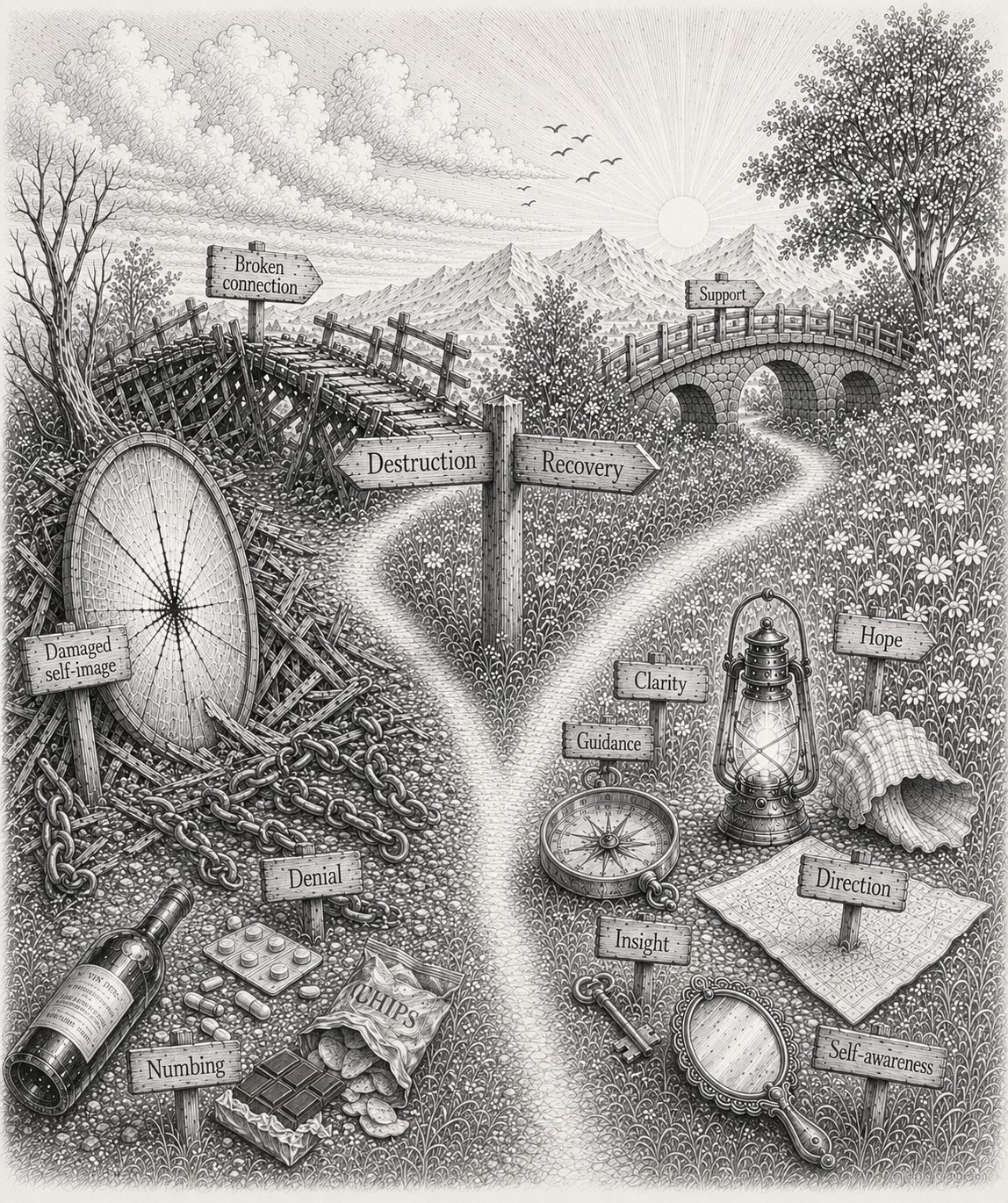
What do you choose when life gets hard?
What do you choose when you are hurt?
Not when life is easy.
Not when you are getting your way.
Not when you feel loved, understood and appreciated.
What do you choose under pressure?
I have come to believe that conflict reveals character more clearly than comfort ever will.
Pain can explain a reaction.
It does not automatically excuse it.
When you are hurt, do you become cruel?
Do you become reckless with other people’s trust?
Do you punish?
Do you retaliate?
Do you try to make someone else feel the pain you are feeling?
Do you become destructive?
Or do you remain accountable for how you treat others, even when you are angry, disappointed or wounded?
We all cope with pain differently.
Some people become reflective.
Some become direct.
Some withdraw to regulate themselves.
Some seek support.
Some allow pain to deepen their self-awareness.
And some become destructive.
They say things they cannot take back.
They burn bridges.
They expose confidences.
They weaponize vulnerability.
They retaliate.
They try to wound.
They create collateral damage.
Then, once the storm has passed, they apologize and expect the apology to erase what happened.
But apologies do not reverse consequences.
An apology can acknowledge harm.
It can demonstrate remorse.
It can create an opportunity for accountability and repair.
But it cannot undo what has already been done.
It cannot make exposed information private again.
It cannot immediately restore broken trust.
It cannot erase the moment someone realized that, when you were hurt, their safety became negotiable.
Repair requires more than regret.
It requires honesty.
Accountability.
Changed behaviour.
Respect for the other person’s boundaries.
And an acceptance that forgiveness does not always lead to reconciliation.
The older I get, the less interested I am in what connects people on paper and the more interested I am in what sustains relationships in practice.
Shared history is not the same as shared values.
Blood relation is not trust.
Love is not automatically respect.
And access is not entitlement.
A relationship can contain love and still be unsafe.
Two people can share years of memories and still discover that they do not share the same understanding of loyalty, accountability or care.
Not every damaged relationship should be repaired.
Some relationships suffer from misunderstanding and deserve an honest conversation.
Some suffer from incompatibility and deserve acceptance.
Some can be repaired, but only when both people are willing to take responsibility for their part.
And some reveal truths that cannot be unseen.
There are moments when conflict does not merely expose a problem within the relationship. It reveals something fundamental about how a person responds when they feel powerless, rejected, challenged or hurt.
That does not mean people are incapable of growth.
People can learn healthier ways to cope.
They can become more self-aware.
They can take responsibility.
They can repair patterns that once caused harm.
But growth cannot be built on denial.
You cannot change what you refuse to acknowledge.
And no one is required to remain close enough to witness your transformation.
Sometimes the most honest response to a damaged relationship is repair.
Sometimes it is distance.
Sometimes it is grief.
And sometimes it is accepting that love alone is not enough to make a relationship safe, respectful or sustainable.
So when life gets hard, pause before you act.
Ask yourself:
Am I trying to communicate, or am I trying to punish?
Am I protecting myself, or am I deliberately trying to cause pain?
Am I responding from my values, or reacting from my wounds?
Will I still be able to stand behind this choice once the intensity has passed?
Because pain may not always be a choice.
But what you do with it matters.
The question is not whether you will ever feel hurt, angry, betrayed or disappointed.
You will.
The question is:
What do you choose when life gets hard?
And what do those choices reveal about the person you are becoming?
