
How do you know when a coach, therapist, mentor, church, community, support group, or program is right for you?
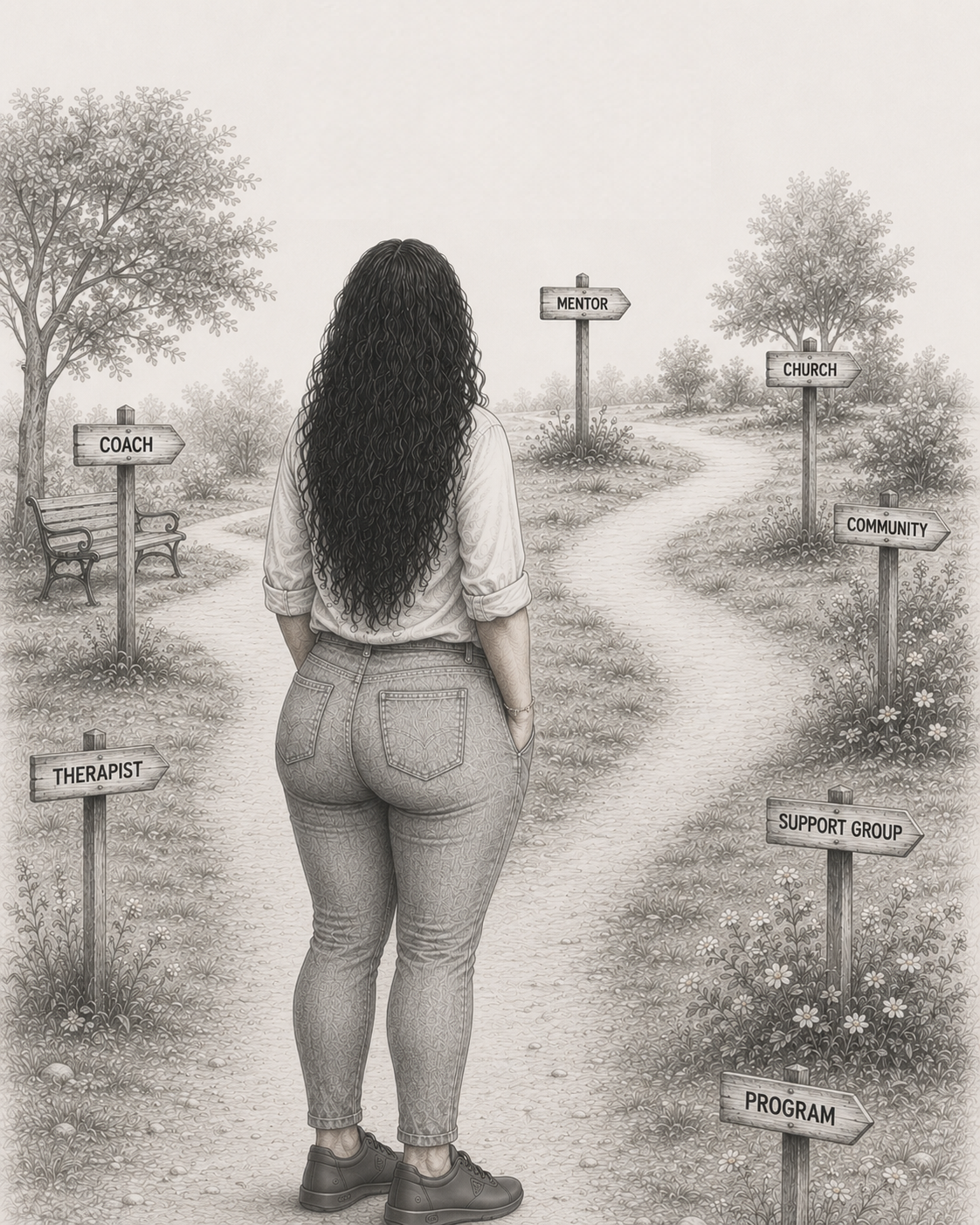
How do you know when a coach, therapist, mentor, church, community, support group or program is right for you?
Over the past few years, I have worked with different coaches, mentors and support professionals.
Some inspired me.
Some challenged me.
Some gave me valuable insight.
Some walked with me through difficult seasons.
And some helped me understand what I do and do not need from the people and spaces I turn to for support.
What I have learned is that finding the right support is not only about qualifications, expertise, reputation or success.
Those things matter.
But so does fit.
So do values.
Pace.
Worldview.
Boundaries.
Emotional safety.
And whether there is enough room for you to remain yourself.
I have learned that I can genuinely admire someone and still recognise that their approach is not right for me.
I can respect someone’s work and still feel overwhelmed by their pace.
I can appreciate someone’s wisdom and still disagree with their assumptions about people, success, faith, healing or what a meaningful life should look like.
I can acknowledge that something has helped many others and still decide that it is not what I need.
That does not make the person ineffective.
And it does not make me resistant, difficult or ungrateful.
It may simply mean that the fit is not right.
The right support should not require you to abandon your own discernment in order to receive it.
It should not make you feel that asking questions is disloyal.
It should not pressure you to move faster than you are able to move.
It should not turn one person’s experience, belief system or method into the only acceptable path.
Healthy support does not ask you to disappear.
It creates enough safety for you to become more honest about who you are.
That does not mean you will always feel comfortable.
Good support may challenge you.
It may confront patterns you would rather avoid.
It may invite you to take responsibility, make difficult decisions or sit with truths that are painful to acknowledge.
But there is a difference between being challenged and being diminished.
Between discomfort that supports growth and discomfort that repeatedly violates your boundaries.
Between someone guiding you and someone trying to control you.
Between accountability and shame.
Between encouragement and pressure.
One of the most important lessons I have learned is that a healthy support relationship is not built on one person having all the answers.
It is built on trust.
On honesty.
On consistency.
On feeling seen without being reduced to someone else’s interpretation of you.
On feeling safe enough to tell the truth, disagree, ask questions and change your mind.
It is built on knowing that the other person is willing to say:
“This is where I can help.”
And, just as importantly:
“This is where my knowledge, role or expertise ends.”
There is safety in being supported by someone who knows their limitations.
Someone who does not pretend that confidence is the same as competence.
Someone who does not use charisma to cover a lack of care, accountability or appropriate boundaries.
Someone who is willing to refer you elsewhere when your needs fall outside what they can responsibly offer.
Looking back, the person who helped me most during one of the hardest periods of my life was not the one with the biggest platform, the most followers or the most impressive personal brand.
She was someone who showed up consistently.
Someone who listened.
Someone who acknowledged what I was going through without trying to force meaning onto it.
Someone who offered support without pretending to have all the answers.
She did not make herself the centre of my healing.
She did not need to be the hero of my story.
She simply made it easier for me to hear myself again.
The older I get, the more I value that.
Not perfection.
Not performance.
Not charisma.
But presence.
Integrity.
Humility.
Consistency.
And the freedom to remain connected to my own voice.
The right support will not always tell you what you want to hear.
But it should help you become clearer, not more confused.
More grounded, not increasingly dependent.
More able to trust yourself, not less.
More honest, not more afraid.
Sometimes the greatest gift another human being can offer is not a solution.
It is a safe place to land while you find your own way.
So perhaps the question is not only:
“Is this person knowledgeable?”
But also:
“Can I be honest here?”
“Can I ask questions here?”
“Can I disagree without being punished?”
“Are my boundaries respected?”
“Does this support help me become more grounded in myself?”
“And does this person know when they are no longer the right person to help me?”
Because the right support should not take you further away from yourself.
It should help you return to yourself with greater clarity, courage and care.
Have you ever been supported by someone who taught you something important, not because they were perfect, but because their presence gave you what you needed in that season?
